 Novelty
 Loafers
 Derby
 Sneakers
 Desert boots
 Oxfords
 Ankle boots
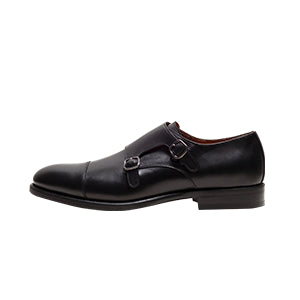 Double Buckle
 End of series
 Novelty
 Loafers
 Derby
 Oxfords
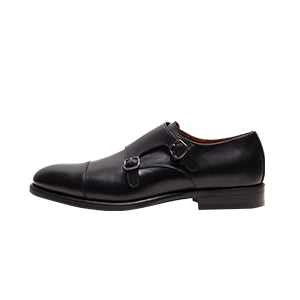 Double Buckle
 Ankle boots
 End of series
 Belts
 Shoe care
 Insoles
 Men's socks
 Laces and strings
 Gadgets

History of Havaianas: from Japan to Brazil
Brazil at the feet, Hawaii in the name, Japan in the shape: the geography of the Havaianas is more lively than two bands suggest. The starting point is the Japanese zōri; in 1962 Alpargatas reinterpreted it in rubber for Brazilian daily life.
To understand how a popular shoe arrived in fashion it is best to look at a few details: the pattern of the insole, a color created by mistake, the flag. The shape changes little. It is its meaning to travel.

1962: a sandal with a Japanese idea was born in Brazil
Havaianas was born in Brazil in 1962, produced by Alpargatas. The reference is it zōri, the traditional Japanese sandal with straps and a sole which, in the classic versions, could be made with woven rice straw. The Brazilian project retains the flip-flop structure, but replaces straw with rubber: a practical, durable material suitable for much wider daily use.

Here lies the first curiosity: Havaianas are Brazilian, but their most recognizable design retains the memory of a Japanese object. It is not a material copy of the zōri: it is an industrial reinterpretation, built around a new raw material and another way of producing.

The rice grain sole is not just a decoration
Look closely at the Havaianas slab: the surface is dotted with small oval reliefs. The pattern has become a visual signature, but its meaning refers to the rice straw soles of the zōri. The brand explains that the texture takes up precisely that imagery and contributes to making the model recognisable.

It's a small design lesson: a historical reference can become an immediately recognizable element without adding logos or decorations. The sole tells the origin of the product even as it carries out its work under the foot.
Why are they called Havaianas if they are Brazilian?
In Portuguese Havaianas means “Hawaiian”. The name evokes Hawaii, then associated in the popular imagination with beaches, sun and holidays. Thus the brand was born with an imaginary geography all its own: a Japanese idea, produced in Brazil and named looking at Hawaii.

The name, therefore, does not indicate the place of production. It is a promise of atmosphere: lightness, warm climate, freedom. It's also one of the reasons why Havaianas is easy to remember in many languages.
The first Havaianas were basic and popular
The first versions were much more sober than the ones we know today: the classic combination was white sole and blue straps. The product was simple, durable and affordable. For decades it was not described as a luxury accessory, but as everyday footwear for every day.

Part of the official story sets the scene as early as 1964 of the traveling salesmen who took the Havaianas around Brazil aboard a Volkswagen Kombi. It is an image very far from boutiques: the product arrives close to people, in the places where they shop and live their day.
In the 1980s, the brand says, flip-flops were included in Brazil among the basic daily goods subject to price controls during inflation, alongside essential products such as rice and beans. It is perhaps the most surprising distance between the Havaianas of then and that of today: Before it became a collectible accessory, it was considered a popular necessity.
A controversial date and a true "archive gem"
When looking for the exact year of the patent or registration of the model, the brand's official sources themselves are not perfectly aligned. The global chronology indicates the 1966; an official Australian FAQ mentions the 1964 for the registration of the industrial model. The brand's Brazilian page also talks about the 1966 license.
For this reason it is more correct to say that the design was registered in the mid-1960s, specifying the difference between the sources if you want to indicate a precise year. A small caution that often disappears in online summaries — and a good reminder that even brand stories should be read by comparing sources.
1969: a production error opens the door to color
For years, Havaianas remain tied to the blue and white combination. Then, according to the official history of the brand, in 1969 a production error brought a batch with green bands to the market. The public response is positive and other shades arrive: brown, yellow, black and other variations.
It is an interesting turning point because the change does not start from a great fashion strategy: it starts from an unexpected event welcomed by customers. Color turns a uniform slipper into a personal choice. From that moment on, Havaianas can also say something about the wearer.
1994: surfers overturn the sole and another way of wearing them is born
The official Brazilian page attributes to the jeitinho brasileiro — the ability to adapt and reinvent with creativity — the birth of the model Tops in 1994. The story goes that some surfers turned the colored sole upwards, creating a monochromatic effect. The brand turned that gimmick into a model designed to showcase just one color.
It's one of the best gems in Havaianas history: to change the look of the slipper you didn't need to invent a new shape. It was enough to look at how people used it and transform a spontaneous gesture into a product. Fashion, in this case, doesn't come down from the catwalk: it comes up from the street and the beach.
1998: a small flag becomes a national symbol
For the 1998 World Cup, held in France, Havaianas launched a version with a small Brazilian flag on the strap. That detail makes the flip-flop more than a summer product: it transforms it into a visible sign of belonging.

The result is a perfect paradox: a shoe born as an economical and practical object begins to carry a national symbol. No need for large dimensions. All you need is a flag in the right place.
1999: the flip-flop goes from the beach to the catwalk
A year later comes another cultural leap. Havaianas appears in a fashion show by the French designer Jean Paul Gaultier. The presence on the catwalk does not erase the popular origin of the slipper; It just makes that simplicity interesting for fashion.
The brand does not have to hide its shape to be accepted in fashion. It continues to be a sole, two straps and a recognizable texture. This is the final paradox: Havaianas becomes sophisticated without ceasing to seem like itself.
For further information, consult the Havaianas official timeline, the history of the brand in Brazil and the Havaianas Australia official FAQ.
The opening images are illustrative compositions generated or adapted with artificial intelligence.