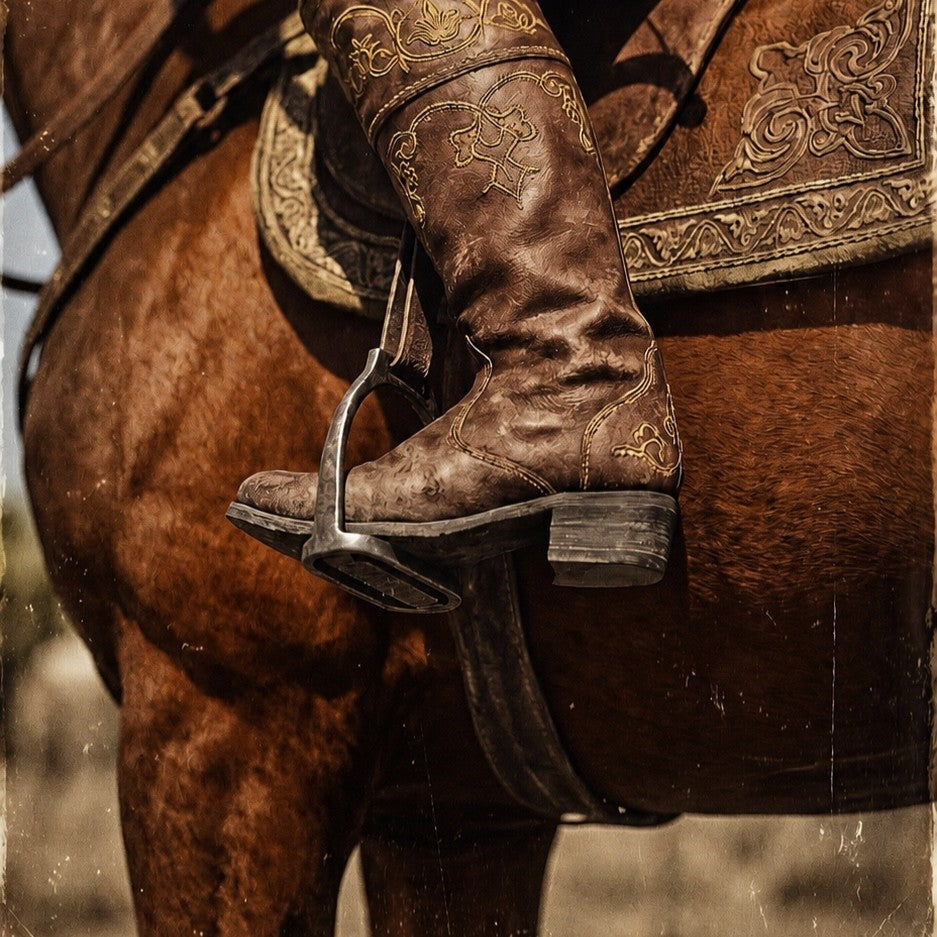
 Novelty
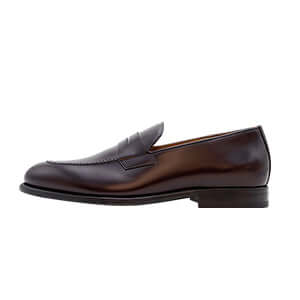 Loafers
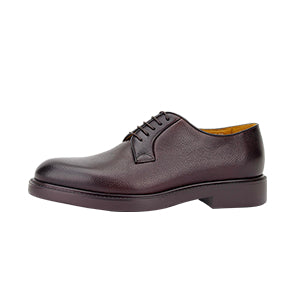 Derby
Derby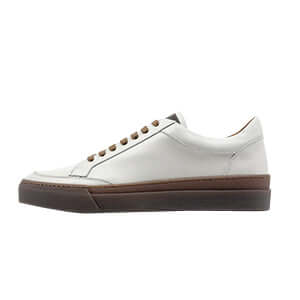 Sneakers
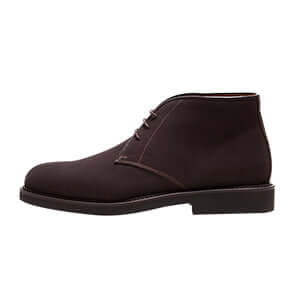 Desert boots
 Oxfords
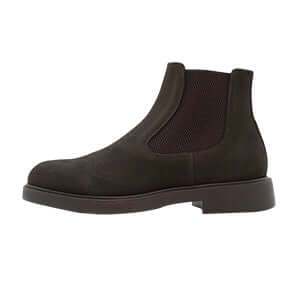 Ankle boots
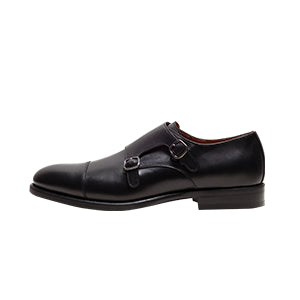 Double Buckle
 End of series
 Novelty
 Loafers
 Derby
Derby Oxfords
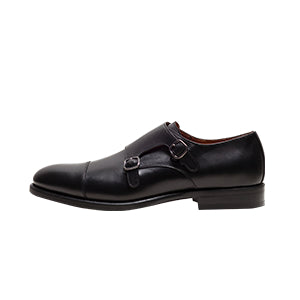 Double Buckle
 Ankle boots
 End of series
 Belts
Belts Shoe care
 Insoles
 Men's socks
 Laces and strings
 Gadgets
The history of Church's: from Northampton to the most iconic English shoe
Church's: before the elegant shoe, a shoe built to last
When we think about today Church's, we immediately imagine a shiny Oxford, an English Derby, a brushed leather brogue, the world of the suit, the office, the British gentleman. It's a correct image, but it only tells the final part of the story.
Before becoming a city shoe, the quality English shoe was born in a much more concrete context: walk, protect the foot, resist time and be able to be repaired. The tradition from which Church's comes is also that of country shoe: sturdy shoes for tackling damp terrain, country estates, woods, hunting days and long journeys. Not fragile showcase shoes, but technical objects.

Why Northampton?
Church's was born in Northampton, and this is not a geographical detail. For centuries this area of England was one of the great hearts of British footwear: leather, tanneries, artisans, specialized labor and a favorable position for distributing goods.
Northampton's shoe wasn't meant to just be pretty. It had to be solid, well built, resoleable. English tradition has always had a very close relationship with function: a shoe must stay under the foot for years, not for a season.
This is where Church's should be inserted: not as a brand born from nothing, but as one of the strongest expressions of a production ecosystem. A city, many families of shoemakers, technical knowledge that passes from hand to hand.

The roots in the seventeenth century and the official birth in 1873
The Church family history is traced back to Sixteenth century. According to the tradition told by the brand, Anthony Church began a small artisan production in Northampton as early as 1617; other reconstructions indicate the family tradition in handmade men's shoes starting from 1675.
Here we need to be precise: Church's as a company was officially founded in 1873. First there is a family tradition of shoemakers; then comes the actual industrial foundation.
In 1873 Thomas Church he opens the first Church's Shoes factory at 30 Maple Street, Northampton, together with his wife Eliza and his sons Alfred and William. It is Victorian England: cities are growing, industry changes the way it produces, the urban bourgeoisie needs a new daily uniform.


From hunting to the city: the robust shoe becomes elegant
The most fascinating thing is that the elegant English shoe is not really born separate from the sturdy country shoe. In England the border between city and countryside has always been cultural even before geographical: the elegant man could go from the club to the estate, from the office to the weekend, from tweed to a dark suit.
This is why many English shoes carry a practical imprint within them. Let's think about brogue: today we see them as elegant decorations, but tradition links the perforations of country shoes to the need to let water out when walking on damp ground. A function then becomes aesthetic. A necessity becomes style.
Church's grows precisely at this point of transformation: it takes a shoe culture made to last and brings it into the wardrobe of the new modern man. No longer just footwear for the woods, hunting or countryside, but shoes suitable for the bank, office, travel, business and city.

The great intuition: the right shoe and the left shoe
Today it seems impossible to imagine the opposite, but in the 19th century many shoes were still built on lasts straight, that is, without a real anatomical distinction between the right foot and the left foot.
William Church understands that the modernity of the elegant shoe lies not in making it flashier, but in making it more precise. Introduces the model Adaptable: differentiated right shoe and left shoe, available in different widths, materials and half sizes.
It is a silent revolution. It's not a logo. It's not a buckle. It is not a sign that can be seen from afar. It's something much more important: the shoe really starts to adapt to the foot.

1881, SATRA and footwear research
In 1881 the boot Adapted, a trademark registered by Church's, obtains recognition on display. The point is not just the medal, but what that medal says: Church's is perceived as a manufacturer capable of bringing technical innovation into the classic shoe.
In 1919 Church's is also among the founding members of the British Shoe and Allied Trades Research Association, known as SATRA. It's an unromantic but fundamental detail: behind a pair of shiny Oxfords there are materials, resistance, construction, tests, fit, duration. Elegance is not enough if the shoe doesn't hold up.
The Twenties: London, New York and the World
In the 1920s Church's opened up more and more to the world. The first boutique arrives in London, the first female models and the overseas expansion. In 1929 the first American store opened in New York, and in the same period one of the most interesting models of the brand was also born: the Shanghai.
The Shanghai is important because it breaks the too narrow idea of Church's as the only black Oxford for a businessman. The English brand knows how to be classic, but also archive, experimentation, particular workmanship, character.

Church's, the Queen and the myth of England well fit
When talking about historic English brands, it is easy to fall into the temptation to link everything directly to the Crown. On Church's we must be correct: the most prudent and documentable fact is the brand's relationship with the British institutional imagination and with English exports, rather than a precise and verified narrative of "shoes made for the Queen".
Church's, however, belongs to that family of products that represent England well in the world: like Barbour coats, certain tweeds, certain porcelains, certain country shoes. Objects that don't try to look new every year, but that build reputation through continuity, materials and durability.
This is why Church's is often described as one of the great English manufacturers: a shoe born from Northampton, adopted by the world, associated with a concrete, measured form of British elegance without too many special effects.

James Bond, Tony Blair and pop consecration
Church's does not remain closed to the world of shoe enthusiasts. It also enters the pop and political imagination.
In 1995, in GoldenEye, Pierce Brosnan wears Church's shoes as James Bond. It's a perfect choice: Bond doesn't have to look fashionable, he has to look flawless. The classic English shoe becomes part of that image of control, coolness, elegance and danger.
Then there is an anecdote often quoted above Tony Blair, who for years would wear a pair of black Church's brogues considered good luck during question sessions with the Prime Minister. Whether you love politics or not, the image is interesting: a classic shoe that becomes a ritual, a habit, almost a talisman.

1957: St. James Road and the factory as root
In 1957 Church's opened its headquarters St. James Rd, also in Northampton. It is an important step because, while many brands become just names and logos, Church's maintains a physical connection with its city.
The factory is not just a production place. It's part of the story. For a shoe built in many steps, with complex processes and subsequent checks, the place matters. It matters because it preserves skills, gestures, habits and technical memory.

The 250 steps: why a Church's costs
According to the most widespread reconstructions of the production process, approximately 250 operations and several weeks of work. The point is not to use the number as a slogan, but to understand what it means: a shoe of this type is not just leather. It's a process.
Cutting, hemming, assembling, bottoming, sewing, finishing, polishing, checking. Each step can make or break the final result. The well-made classic shoe is an object in which the value is not concentrated in a single element, but distributed in many invisible steps.
And this is where the theme of duration returns. A Church's under construction Goodyear was born to be resoled. When the bottom is worn but the upper is still alive, the shoe is not finished: it can continue.
True luxury, in a classic shoe, is often not the detail that screams. It's the detail that no one notices, but that you feel every time you walk.
1999: Prada buys Church's
In 1999 comes the twist: Prada acquires Church's. One of the most English shoes ever enters an Italian luxury group.
It is a fascinating and delicate passage. On the one hand, Church's enters a stronger international structure, capable of pushing retail, communication and global positioning. On the other hand, for many enthusiasts an inevitable question arises: does Church's remain a traditional English manufacturer or is it increasingly becoming a fashion brand?
This tension is the modern paradox of the brand. Church's was born as a technical, robust, almost conservative shoe; then he ends up inside one of the most important Italian groups in contemporary fashion. A shoe born to last enters the global luxury system.

The change in positioning: from English shoe to global luxury brand
In recent years Church's has been increasingly perceived as a global luxury brand. Boutique, communication, prices and image move the brand into a different territory from that of traditional English manufacturing alone.
This does not erase history. In fact, it makes it even more interesting. The value of the brand today lies precisely in the coexistence between two souls: the shoe born in Northampton, with the mentality of a repairable and durable object; and the contemporary brand, part of a luxury group, inserted into the rhythms of international fashion.
The real question is: what must remain of Church's for Church's to continue to be Church's? The answer, in our opinion, is simple: construction, shape, leather, repairability, fit. If these elements remain central, the brand can change its language without completely losing its soul.

Why Church's still matters today
Church's matters because it represents one of the strongest ideas of classic footwear: a shoe is not just an image. It's a construction.
A well-made Oxford, Derby or Church's brogue doesn't just live on the first day of purchase. It lives in the polishing after months of use, in the crease that forms on the upper, in the sole that wears out, in the decision to resole it instead of throwing it away.
As shoemakers, this is the part that interests us most. Church's are shoes that often arrive in the laboratory with a story. They are not always perfect, they are not always new, they are not always treated well. But when the upper is still healthy, the bottom can be rebuilt. The shoe can continue to walk.
Repairing a Church's: when it makes sense
A well-built Church's almost always deserves an evaluation before being replaced. If the upper is intact, the lining is not completely compromised and the structure holds up resoling Church's with Dainite sole it can be a very sensible solution.
The reason is simple: the upper part of the shoe has already taken the shape of the foot. It has already become personal. Replacing the sole often means preserving what has value and renewing what has worn out.
This is the smartest way to read a classic shoe: not as a disposable object, but as a long-term companion.