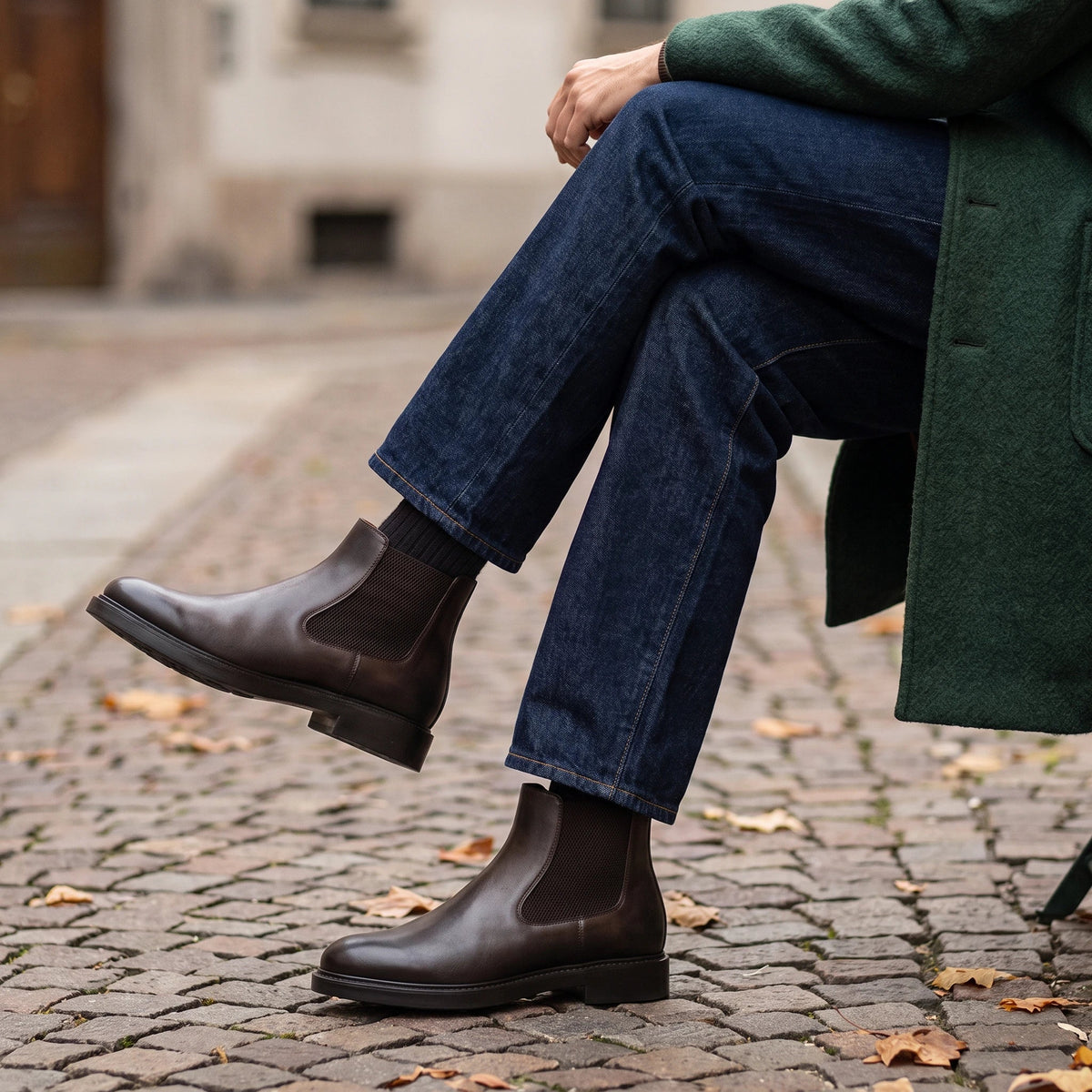
 Novelty
 Loafers
 Derby
Derby Sneakers
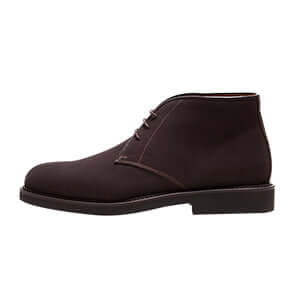 Desert boots
 Oxfords
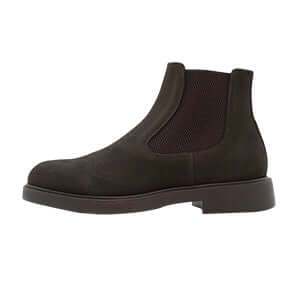 Ankle boots
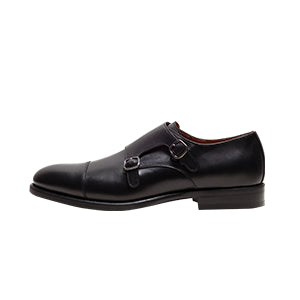 Double Buckle
 End of series
 Novelty
 Loafers
 Derby
Derby Oxfords
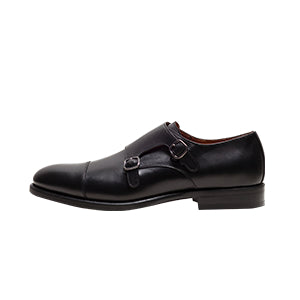 Double Buckle
 Ankle boots
 End of series
 Belts
Belts Shoe care
 Insoles
 Men's socks
 Laces and strings
 Gadgets
Brown shoes: shades, combinations and patina of the leather
Combine a cognac shoe and a dark brown shoe with the same blue trousers. The first pairing highlights the foot; the second accompanies him discreetly. Talking about "brown shoes" as a single color hides half the fun.
The choice concerns tone, finish and proportions. Then comes time: some surfaces acquire depth, others immediately show abrasions. Learning to distinguish these changes also helps to choose the right cream.

Brown is not just one color
Saying “brown shoe” is a bit like saying “red wine”. Between an almost black dark brown and a bright cognac there is a world. The first is sober, profound and formal; the second highlights every nuance of the skin. Chestnut and tobacco are in the middle and are probably the shades in which the material best expresses its surface.
This variety explains part of the current fascination. Black tends to unify. Brown, on the other hand, leaves light veins, folds, lighter and darker areas. On quality leather this irregularity is not necessarily a defect: it is often what makes the shoe less flat and more alive.
Smooth skin, suede or brushed leather: the brown changes completely
The same color can behave very differently depending on the material. On one smooth skin brown can be nourished, polished and modulated with pigmented creams. A good upper allows you to recover small marks and, over time, can gain depth.
In suede, however, the color is read through the hair. Just pass a brush in two directions to see two different shades. It is precisely this ability to capture light that makes brown suede so rich, but it requires different maintenance: no smooth skin creams and a lot of attention to specific brushes and products.
The brushed leather or very refined offers a more uniform and brilliant appearance. It can be beautiful, but it tells less about the natural grain. When buying a shoe, therefore, it is not enough to ask "what color is it?". You have to ask yourself What leather am I looking at and how was it finished?
The real advantage of brown: patina
A well-constructed brown shoe can develop a very noticeable patina. The areas subjected to flexion change, the tip can become deeper, the edges can darken. With intelligent maintenance the color gains levels instead of simply becoming old.
But be careful not to romanticize any discoloration. A patina is a harmonious transformation of the surface; a water stain, a salt halo or a poorly applied cream that is too dark are another thing. The limit is the uniformity of the result and, above all, the health of the skin.
How to tell if brown leather is quality
Color alone says nothing about quality. Look at the shoe closely and then hold it under a side light. An interesting surface shows depth and does not simply appear to be covered by a uniform layer of color. By gently pressing the upper, observe how it reacts: the leather should bend without immediately feeling plastic-like.
Then check the less "photogenic" points: edge of the upper, area near the laces, lining, stitching and junction with the sole. The quality of a shoe is often best understood where the designer doesn't expect you to look.
This doesn't mean that perfectly even skin is necessarily poor. There are very regular fine finishes. It just means that “natural” and “expensive” are not automatic synonyms, and that you need to read the whole thing.

Dark brown, chocolate, cognac: which one to choose?
The dark brown head it is the easiest for those coming from black: it is discreet, elegant and tolerates small marks well. The chocolate it's warmer and more contemporary, especially on Loafers, boots and suede. The cognac it is the most expressive: it enhances the skin but makes stains, color differences and incorrect maintenance more visible.
If your goal is a shoe you'll use often, medium-dark brown is probably the easiest compromise. If, however, you like to see the material change over time, cognac and chestnut offer more possibilities.
How to match brown shoes without falling into old rules
The strict “brown with this, black with that” rules belong to a much more formal wardrobe than the contemporary one. Today a dark brown shoe works with blue, gray, denim, olive green, cream and of course with almost the entire beige family. Cognac shades create more contrast; espresso and dark brown can almost replace black.
The point is not to make all the browns match perfectly. Indeed, an identical belt, bag and shoes may be more constructed than necessary. It is often more elegant to work for close color families.
Maintenance: the most common mistake is using too much product
On a smooth leather shoe, cleaning comes first, then a small amount of color-matching cream, finally brushing. Applying a lot of cream does not nourish "more": it can saturate the surface, leave residues and alter the shade.
On light colors it is best to always try the product in an inconspicuous area. A neutral cream reduces the risk of color change but does not always cover scratches and loss of pigment; a colored cream can blend better, but must be chosen carefully.
For the suede the logic changes: specific brush, localized interventions and products designed for pile materials. Classic cream for smooth leather on suede is one of the most difficult mistakes to correct.
Rain: does brown deteriorate more than black?
Not necessarily. On brown, however, some halos are more visible. If the shoe gets wet, the priority is to let it dry slowly, away from radiators, hairdryers and direct heat sources. Unprinted paper towels or a suitable shoe tree help maintain the shape.
Once completely dry, the skin can be assessed and treated. Intervening when it is still wet often worsens the result. With suede it's even more important: complete drying first, then recovering the fur.

Can a brown shoe change color?
Yes, within certain limits. Pigmented creams and waxes can gradually darken some areas and create depth effects, but dramatically transforming a shoe is a different intervention. Furthermore, each leather reacts differently based on tanning and finishing.
It's also why two brown shoes of the same model may not age identically. In the artisanal product this variability, if controlled, is part of the charm.
The natural patina is not a hand dye
The evolution due to use and light and the effect created with pigments are different phenomena, although in the trade they are both called patina. Before asking for treatment, clarify whether you want to keep the color, recover it or modify it. A darker result is not necessarily reversible.
The desktop image is an illustrative scene generated with AI and does not document processing on a specific Ciccone model.