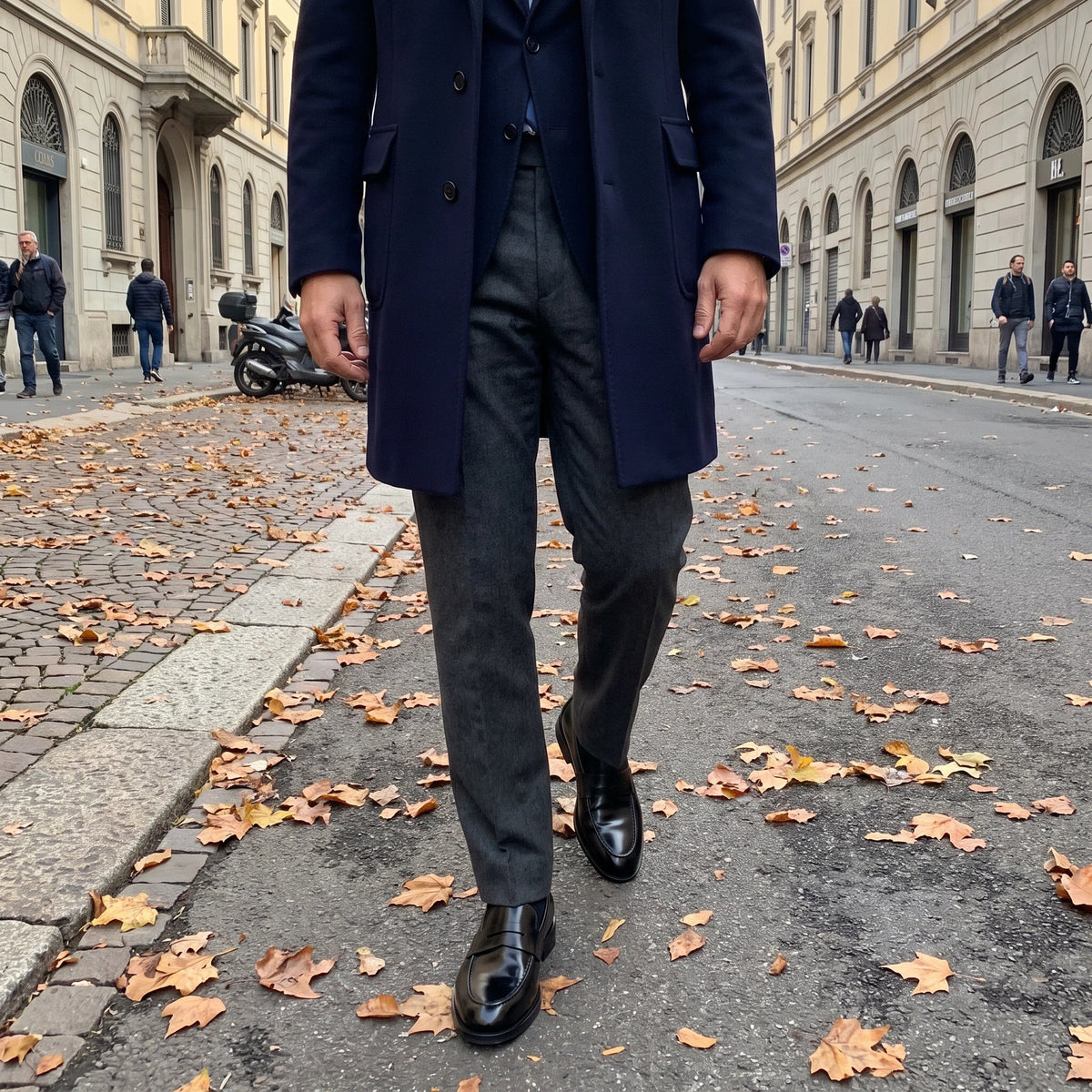
 New arrivals
 Desert boots
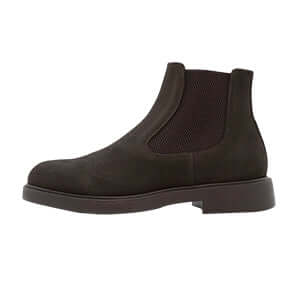 Ankle boots
 Sneakers
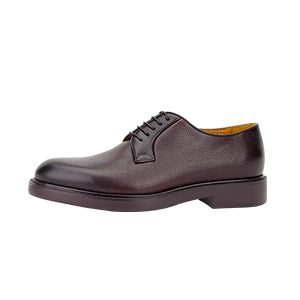 Derby
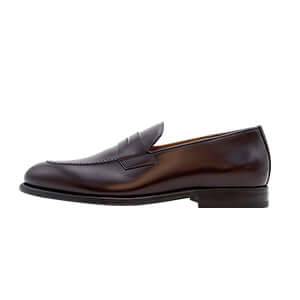 Loafers
 Oxfords
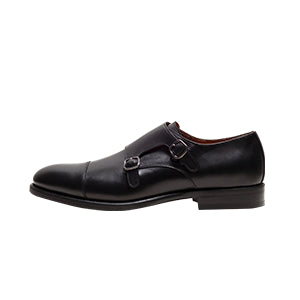 Double monk straps
 Last pairs
 New arrivals
 Ankle boots
 Loafers
 Derby
 Oxfords
 Double monk straps
 Last pairs
 Belts
 Shoe care
 Insoles
 Men's socks
 Shoelaces
 Gadgets

History of the Chelsea boot: origins and success
Chelsea almost seems to have eliminated the closure system: no laces, no buckles. It actually moved it to the sides. The two elastic bands allow the foot to enter and leave the line of the upper continuous.
Before becoming a Londoner, musical and city-dweller, this boot is a practical solution. Its story starts from here, from a material that makes a daily gesture possible: putting on and taking off the shoe with ease.
A Victorian boot, before the name Chelsea
The boot with elastic inserts is associated with J. Sparkes-Hall, Queen Victoria's shoemaker. The reconstructions do not always coincide in dates, so it is more solid to talk about its Victorian origins than to assign it an undisputed birthday. Even the name comes after the shape: at the beginning the most direct description is elastic side boot.
The V&A delves into Sparkes-Hall's role in the history of the elastic boot.
The route also crosses the equestrian environment, where an easy-to-wear boot finds a concrete use. Long before the fashion icon, there was a shoe to use.

London changes the meaning of the same silhouette
In the twentieth century the line entered the urban wardrobe; in the 1960s the link with London and musical culture became central to his imagination. However, it is not necessary to attribute the invention of Chelsea to the Beatles. The so-called Beatles boots are a reinterpretation, often with a sharper toe and Cuban heel.
An archival detail helps to see the transition: Crockett & Jones documents an elastic boot in the 1925 catalog and the name Chelsea in its 1961 warehouse catalogue. These are traces in the history of that manufacturer, not birth dates valid for the entire category.
How to recognize a Chelsea boot
Covered ankle, side elastic panels, no laces. Material, heel, toe and sole can change a lot. This is why a city Chelsea and a more robust one belong to the same family without promising the same use.
Turin and Trento: the material changes the tone
The Torino Ciccone in suede calfskin highlights a matte surface that is soft to the eye. Trento, in brushed leather, has a brighter effect. With wool, denim or more composed trousers the result depends on this relationship between texture, color and proportions.


The simplicity of the design does not mean simplicity of workmanship: the upper must follow the foot and ankle without creating random volumes. When the shoe has few elements, each curve becomes more evident.
Elastic bands should not compensate for a wrong size
A Chelsea doesn't tighten with laces. Test the entry of the foot, then walk: the neck must be accompanied, the toes free, the heel contained without excessive pressure. The elastic facilitates the gesture; it must not be the only component holding the shoe.
Use the loop without tugging and a shoehorn when useful. If the panel remains deformed or loses its return, a craftsman can evaluate replacement: feasibility and result depend on the assembly. They are small attentions, but they preserve the very detail that made the model possible.
The desktop image is an illustrative composition adapted with artificial intelligence from a catalog photo.