 New arrivals
 Desert boots
 Ankle boots
 Sneakers
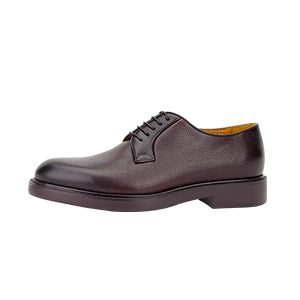 Derby
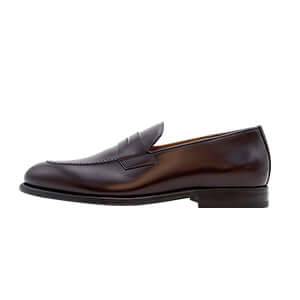 Loafers
 Oxfords
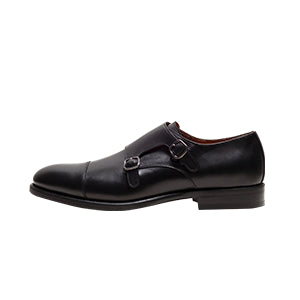 Double monk straps
 Last pairs
 New arrivals
 Ankle boots
 Loafers
 Derby
 Oxfords
 Double monk straps
 Last pairs
 Belts
 Shoe care
 Insoles
 Men's socks
 Shoelaces
 Gadgets

History of brogues: why they have holes
Look at the tip of a brogue: it looks like a little chisel work. Rows of holes, serrated edges, a central design. Today we read those signs as British elegance; the story of their origins takes us instead to damp lands, far from living rooms.
The interesting passage is this: a detail associated with practical life becomes decoration. And the decoration ends up being more famous than the structure on which it is applied.
Before the living rooms, the wet ground
Tricker's reconstructs the history of perforations starting from Highland footwear: holes are traditionally linked to the possibility of letting water that has entered the shoe escape. It is the manufacturer's historical account, not the technical description of a current brogue. Today, decorative perforations are not a drainage system and do not make the shoe waterproof.
Tricker's tells the story of the brogue's journey from rural origins to the modern wardrobe.
The same source recalls that brog, of Gaelic origin, indicated the shoe in general. The name that we now associate with an ornament had a much broader meaning. Fashion narrows words while broadening their uses.

Brogue is a decoration, not a lacing
Oxford and Derby explain how the shoe closes. Brogue describes perforations and ornamentation. A pair can therefore be Derby and full brogue at the same time: the two words answer different questions.
How to read the drawing, from the most sober to the richest
The quarter brogues usually features perforations along the edge of a straight toe cap, without a central medallion. The half or semi brogue adds the medallion. Nella full brogue the toe box opens like a wing: it is the silhouette often called wingtip.
Attention to one detail: the wing is a shape of the cut, the hole is a decoration. A wing tip without perforations is often called austerity brogue. It's one of those exceptions that helps you understand the rule.

Bellagio and Treviso: the vocabulary becomes visible
Derby lacing and full brogue decoration coexist in the Bellagio and Treviso Ciccone. To recognize them, first look at the edges of the laces, then the toe cap, and finally the holes. Three steps are enough to separate structure, form and ornament.

With tweed, velvet or dark denim the perforations create a natural bond with material surfaces. With a dress the result also depends on the color and volume of the sole. In general, a richer design lowers the formality compared to an equivalent smooth lace-up; However, it is not a ban on bringing it to the office.
The cream in the holes: a small, very visible error
On smooth skin, just a little compatible product and a suitable brush, used without forcing. Light buildup along perforations can make a healthy shoe look neglected. No needles or sharp objects are needed: they could damage the finish. On suede we change the method, because the cream for smooth leather compacts the fur.
This is the peculiarity of the brogue: the detail that makes it interesting also requires a little more attention. Not much. The right one.
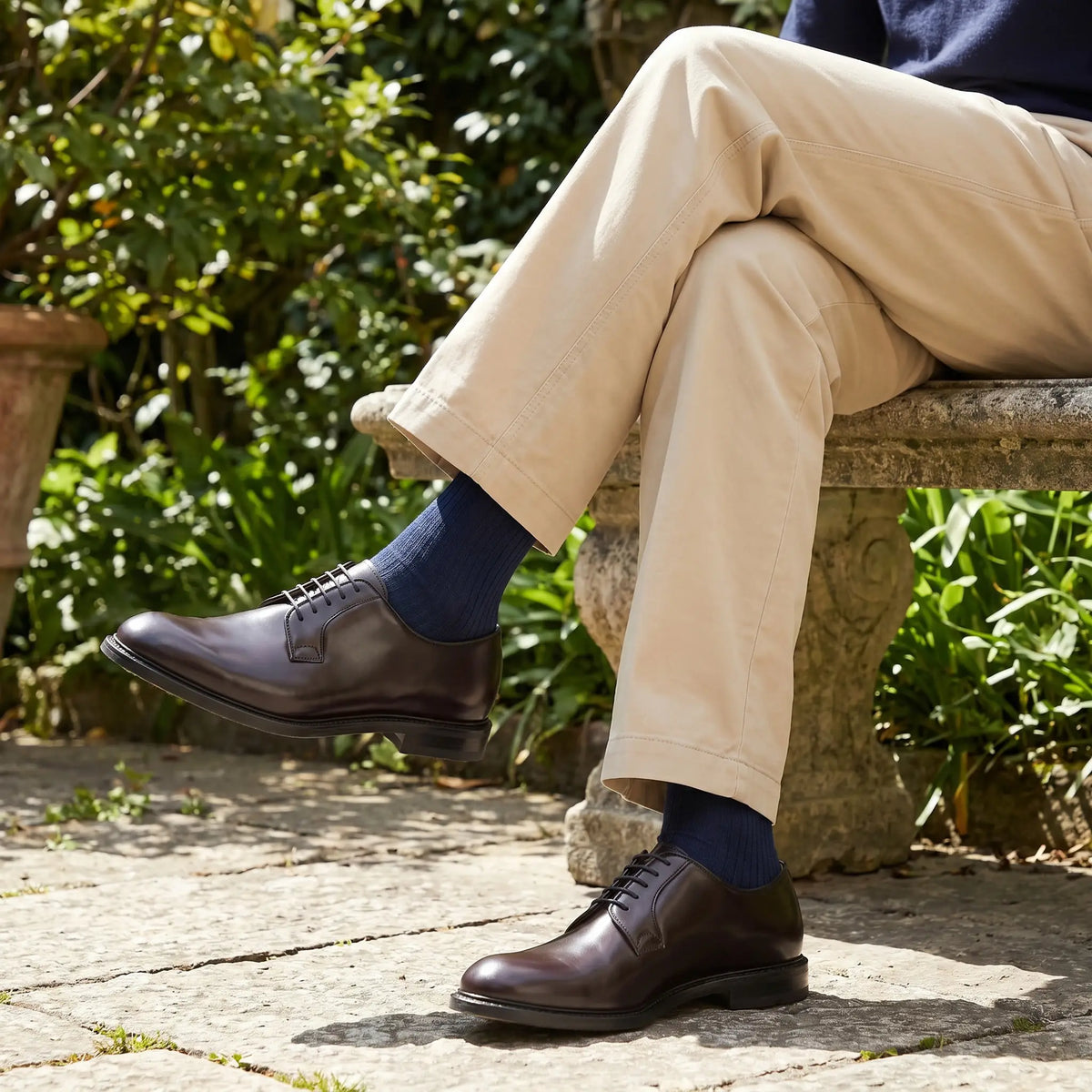
The desktop image is an illustrative composition adapted with artificial intelligence from a catalog photo.