 Novelty
 Loafers
 Derby
Derby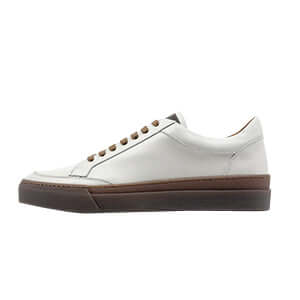 Sneakers
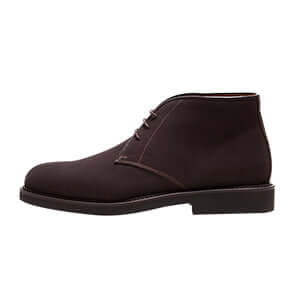 Desert boots
 Oxfords
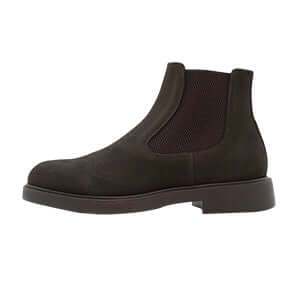 Ankle boots
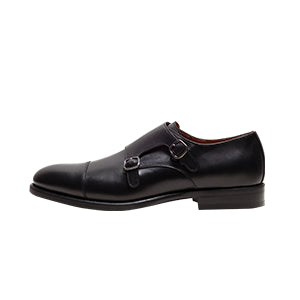 Double Buckle
 End of series
 Novelty
 Loafers
 Derby
Derby Oxfords
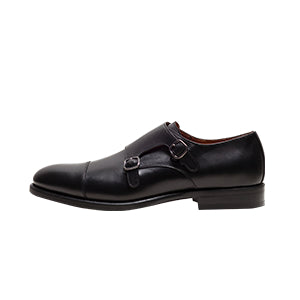 Double Buckle
 Ankle boots
 End of series
 Belts
Belts Shoe care
 Insoles
 Men's socks
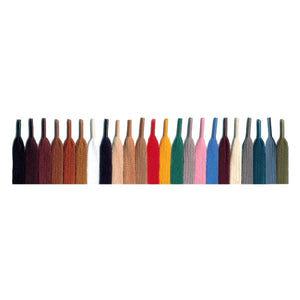 Laces and strings
 Gadgets
Lived bags: how to distinguish patina from skin damage
A honey colored handle can tell of years of use. An attack that gives way instead tells of a job to be done. Calling them both "patina" is the quickest way to confuse the charm of time with a structural problem.
To read a lived-in bag we look at three things: surface, elasticity and parts that support the weight. The goal is not to erase every trace. It's understanding which signs can be preserved and which deserve attention.
What leather patina really is
The patina is the set of surface transformations that develop with use, light, contact with the hands, friction and correct maintenance. In natural patina it is not a film applied at a later time: the change arises from the interaction between the leather, its finish and the life of the object.
On smooth cognac leather, for example, the patina can appear as greater color depth on the handles, a soft sheen on the edges, and small differences in tone. On highly pigmented or coated leather, however, the evolution may be more limited because the surface layer insulates the fiber more.

Patina, dirt or damage? The difference in a few seconds
| Sign | What to observe | Most probable interpretation |
|---|---|---|
| Deeper color on the handles | Even tone, skin still elastic | Natural patina or light deposit to be evaluated |
| Blue or black halo on the back | It appears where the bag rubs on denim or dark clothing | Color transfer, not patina |
| Small lines that open by folding the skin | Rigid, matte or rough surface | Dryness or a deteriorating finish |
| Clearer corner | Loss of color at rubbing points | Superficial abrasion |
| Soft handle near the attachment | Deformation, tight seam or internal core perceptible | Structural problem, not simple cosmetic wear |
The most useful test is to observe the mark in natural light and gently move the affected part. A healthy patina accompanies the bending of the skin; damage tends to open, flake or show material loss.
Which leathers develop the best patina
full-grain leather
It preserves the surface closest to the natural one and, when the finish allows it, can develop rich and deep variations. Pores, slight grain differences and small irregularities are not necessarily defects: they tell the story of the material. This doesn't mean every full-grain leather must be rustic or unprotected.
Aniline and semi-aniline leather
The more transparent finishes leave the skin lighter and tend to react more clearly to light, humidity and contact. They are fascinating but require attention: a drop, the wrong cream or a dark garment can leave marks more quickly.
Pigmented skin
A covering finish makes the color and surface more uniform and can offer greater resistance to daily use. The patina will often be less pronounced; when the coating wears out, the transition between the intact surface and the abraded area can be clearer.
suede and nubuck
The word patina should be used with caution here. The fur may become shinier or more compact in the areas touched, but grease, dust and crushing are not always a desirable evolution. Maintenance requires specific brushes and products: never use on suede a cream designed for smooth skin.
Painted or coated leather
The shiny surface is given by a coating. It does not develop a patina in the same way as natural leather: scratches, dulling, stickiness or color transfers are alterations to the surface film. In particular, storing light paint in contact with dark materials can cause color migration.
Where a bag ages faster
Not all areas work the same way. Reading the wear map helps to understand if evolution is normal:
- Handles: they absorb heat, humidity and substances present on the hands. They tend to darken and shine.
- Corners and bottom: suffer abrasion against surfaces, clothing and seats. Localized color loss is common, but should be checked before it affects the material.
- Top edge: is bent and touched often; edges and stitching can wear out.
- Handle and shoulder strap attachments: bear the weight. They are structural areas and deserve immediate attention if they become deformed.
- Back of the bag: rubs against coats and denim, with the risk of color transfer.
- Lining: collects dust, cosmetics and small objects; an internal stain can migrate outward.
The right maintenance starts from a simple principle
The most aggressive product is not the one that cleans best: it is the one that risks changing the material the most. Before applying any substance you need to understand what skin you have in front of you and always test in a hidden area.

Essential routine for a smooth leather bag
- Empty the bag and remove the dust from inside without shaking it violently.
- Dust the outside with a soft, dry cloth, delicately insisting on seams and folds.
- Check the material in natural light: colour, elasticity, halos, abrasions and stitching.
- Test the product in a hidden area and wait for the result, not a few seconds.
- Apply very little product, working small areas and without saturating the skin.
- Leave to stabilize the surface before polishing or storing the bag.
The frequency depends on use and leather. A bag used every day requires more frequent checks than an occasional bag, but that doesn't mean applying cream every week. Too much product can darken, weigh down or make the surface sticky.
Five home remedies that can make the situation worse
- Generic Cleaning Wipes: they may contain alcohol, surfactants or perfumes not intended for the skin.
- Alcohol and solvents: they can remove stain, color and finish together.
- Edible oils: they are not leather conditioners; they can go rancid, create streaks and attract dirt.
- Abrasive sponges or aggressive erasers: they transform a surface stain into a loss of finish.
- Highly pigmented creams chosen "by eye": they can cover the grain, stain seams and change the tone irreversibly.
If a treatment found online promises to eliminate any blemish from any skin, it is already a good reason to be wary. Material, color, finish and damage history completely change the correct method.
When you shouldn't try to "uniform" the patina
One bag may have a slightly darker handle than the other, a shinier corner, or small variations on the body. Uniforming everything with colored creams can erase the very depth that makes leather interesting.
We intervene when the irregularity derives from dirt, loss of color, halos or a progressive alteration, not simply because the skin is not identical in every point. Before dyeing or pigmenting you must also consider seams, edges, lining and hardware: a color applied without control can migrate to adjacent parts.
Color transfer: the most common false “aging”.
The typical case is a beige, cream or light leather bag worn against jeans or dark coats. Rubbing deposits pigment on the surface, often on the back and along the edges. It is not a patina and it is not always simple dirt: depending on the finish, the dye can remain on the surface or penetrate.
Acting quickly helps, but scrubbing hard can set the pigment or wear away the finish. The prudent method is to discontinue use, check the nature of the skin and have the problem evaluated when the halo is extensive or the background color is delicate.
The signals that require artisanal evaluation
- handle thinning or deforming near the stem;
- seam that begins to open, especially in the load-bearing areas;
- edging that lifts or becomes sticky;
- very dry skin that opens when flexed;
- color transferred to a clear or painted surface;
- hinge that forces and tensions the edge;
- bottom losing shape or internal reinforcements breaking;
- persistent smell of humidity or presence of mould.
Intervening early doesn't just improve appearance: it can prevent an aesthetic problem from becoming structural. A reinforcing stitch performed before complete rupture, for example, retains more of the original material than a subsequent reconstruction.
How to preserve a bag without erasing its character
Good storage does not have to make the bag immobile and rigid. It must protect it from dust, light and deformations while allowing the materials to breathe.

- Clean it before storing it: dust and residue left for months becomes more difficult to remove.
- Support its shape: use clean white paper or neutral material, do not over inflate.
- Use a breathable bag: better cotton or suitable fabric; avoid closed plastic.
- Separate colors: do not leave a light bag in contact with leather, fabric or colored paper.
- Protect the handles: do not fold them unnaturally and do not suspend the full bag for long periods.
- Avoid sun and heat: they can alter color, stickers and finishes.
- Check it periodically: even an unused bag can dry out, warp or develop moisture.
Restoration or conservation? The goal is not to make it look new
On a quality bag the best intervention is not always the most visible one. Sometimes it is enough to clean and stabilize; other times it is necessary to recover color, redo an edge, replace a hinge or reinforce a handle. The correct choice depends on how much original material can be preserved and the future use of the bag.
A well-designed restoration respects the character of the object. It shouldn't automatically erase every mark, or apply a covering finish just to get a uniform result in photography. The objective is to recover aesthetic balance, solidity and possibility of use.
The manufacturer's specific instructions come before a generic routine: Louis Vuitton, for example, does not recommend creams and detergents on natural cowhide. A neutral cream is therefore not a universal solution for all bags. To understand what interventions are possible, you can consult the artisanal repairs Ciccone. For specific models, the pages dedicated to Neverfull restoration et al Alma restoration show real examples of available processes; the evaluation always remains linked to the actual conditions of the individual exchange.
Monogram does not mean leather
In many Louis Vuitton bags the Monogram body is coated canvas, while the handles and details may be cowhide. Two materials on the same bag require different attention. The amber patina of cowhide is not a model of behavior to be extended to the canvas covering.
The opening images are illustrative compositions generated or adapted with artificial intelligence. The generic subject illustrated is not a Ciccone product.