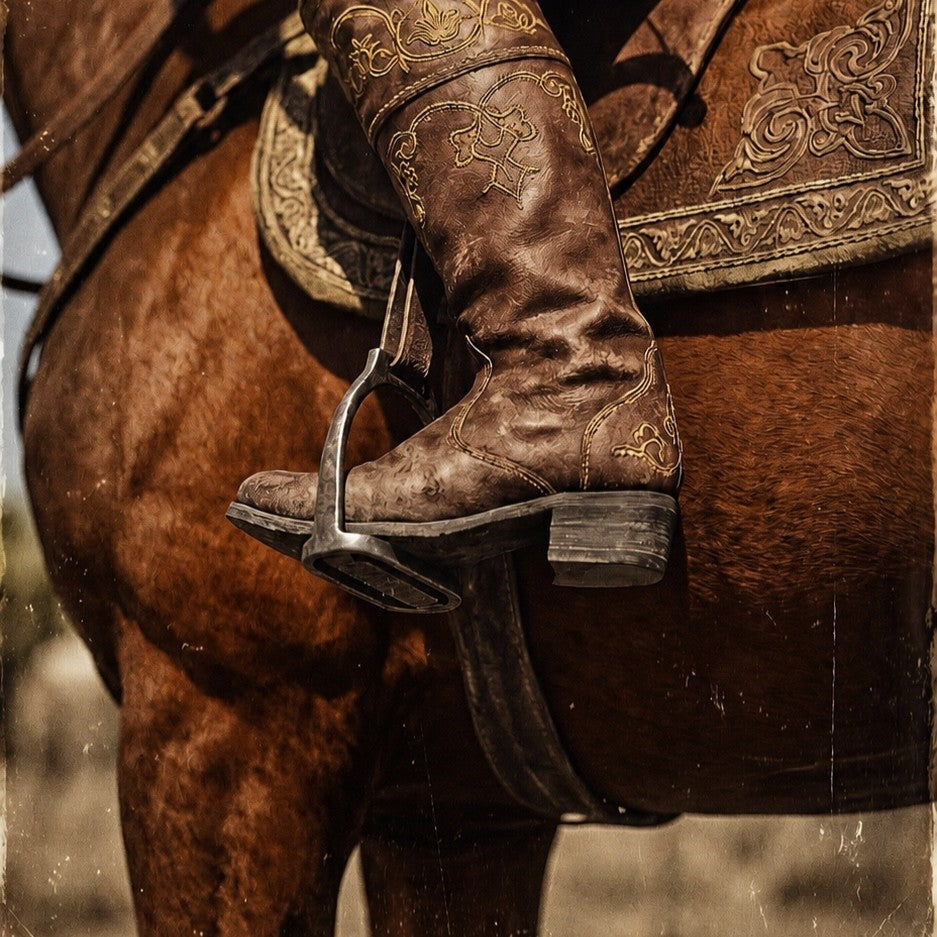
 Novelty
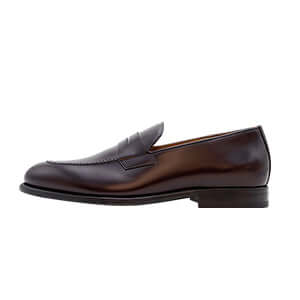 Loafers
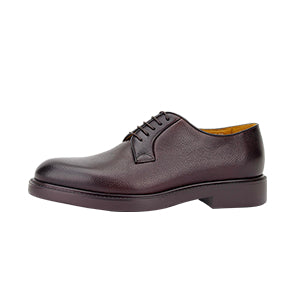 Derby
Derby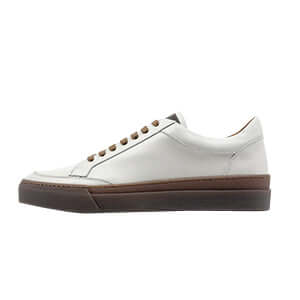 Sneakers
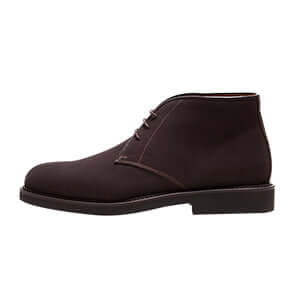 Desert boots
 Oxfords
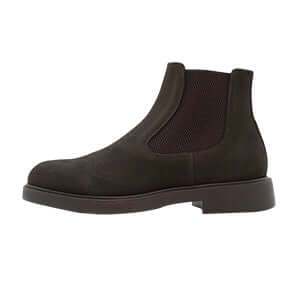 Ankle boots
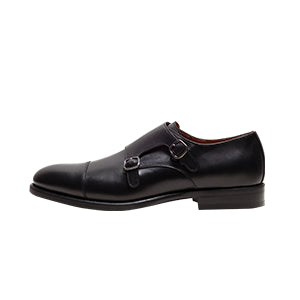 Double Buckle
 End of series
 Novelty
 Loafers
 Derby
Derby Oxfords
 Double Buckle
 Ankle boots
 End of series
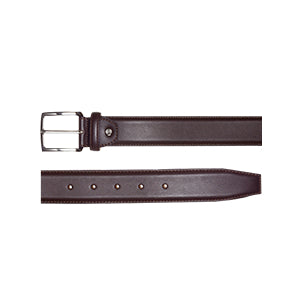 Belts
Belts Shoe care
 Insoles
 Men's socks
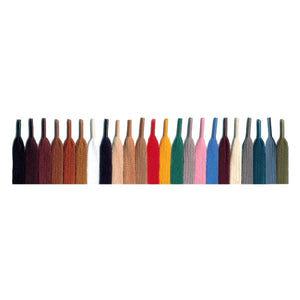 Laces and strings
 Gadgets
Why do Louboutins have red soles?
There are shoes recognizable by the shape, others by the logo, others by the material. Christian Louboutins have become legendary for a detail that, usually, no one looks at first: the sole.
The Louboutin red sole it is one of the most immediate signs of contemporary fashion. There's no need to read a name, there's no need to see a buckle, there's no need to look for a monogram: a flash of red under the foot is enough, while a woman walks, climbs a ladder or crosses her legs.
The most interesting thing is that this signature does not arise from a perfect advertising campaign. It was born from a creative short circuit: a shoe seemed dull, a black sole made it too heavy, next to Christian Louboutin there was a bottle of red nail polish. The rest is history.
This is the story of how a technical part, destined to wear out, became one of the strongest icons of global luxury.
Before the red sole: a child and a forbidden shoe
Christian Louboutin was born in Paris, in the 12th arrondissement, into a family where he grew up surrounded by female figures. This detail often returns in the reconstructions of his biography: not as a decorative anecdote, but as one of the roots of his way of looking at the shoe. For Louboutin, women's footwear is not just an object to wear. It is posture, movement, desire, character.
The first truly symbolic episode comes when he is still a boy. During a visit to the Palais de la Porte Dorée, then home to the Musée national des Arts d'Afrique et d'Océanie, notices a very simple sign: a high-heeled shoe, crossed out by a red line. The message was practical: no stiletto heels, so as not to ruin the floors.
For anyone else it would have remained a ban. For him it becomes an image. A forbidden shoe. A heel. A red line. A small visual scene that already contains much of the Louboutin future: the attraction to the high heel, the idea of elegant transgression, red as a signal, the shoe as an object capable of disturbing the rules.

Expulsion from school and education outside the classroom
At sixteen Louboutin was expelled from school. Put like this, it seems like a note of youthful rebellion, but in his story it almost becomes a necessary step. His apprenticeship does not take place in an orderly manner, within a linear academic path. It happens through images, travel, meetings, behind-the-scenes work, ateliers, stages.
The young Louboutin is not attracted to the shoe as a commercial product. He is attracted to the shoe as a prop. He draws it, observes it, imagines it on women who don't stand still: dancers, performers, women who cross a room with a precise presence.

Folies Bergère: where the heel becomes theater and engineering
One of the decisive places in the formation of Christian Louboutin are the Folies Bergère, the famous Parisian cabaret. Here she works behind the scenes, close to the dancers, the costumes, the lights, the headdresses, the wings and the invisible effort of the show.
It's a perfect laboratory to understand the heel. Not as decoration, but as structure. A dancer must move, stay in balance, support the body, maintain a line. The high heel becomes a technical problem even before an aesthetic one: it must create height, but not betray movement; it must push forward, but also support; it must be desirable, but also intelligently constructed.
This idea will remain throughout Louboutin's career. His shoes will often be extreme, sensual, theatrical, but they are not born from a graphic whim. They arise from the observation of the body in movement.

The apprenticeship: Roger Vivier, Charles Jourdan and the great fashion houses
Before founding his Maison, Louboutin went through a rich and irregular apprenticeship. After travels that nourished his imagination, he returned to Paris with a portfolio of drawings. He enters the world of French footwear, works with important companies and approaches the technical culture of shoes.
The name of Roger Vivier it is fundamental. Vivier is a legendary figure in the history of twentieth-century footwear, associated with the refinement of the heel and the relationship between shoes and high fashion. For Louboutin, it represents a contact with a tradition in which the shoe is not a secondary accessory, but an architectural object.

Also Charles Jourdan it is an important stage. The French brand had a strong footwear culture, and allows Louboutin to enter a more concrete dimension: proportions, construction, materials, production, relationship between idea and finished shoe.

In the 1980s he also worked as a freelancer for large fashion houses. His name is linked to Chanel, a Yves Saint Laurent and other French fashion circles. They are different experiences, but all useful for building a vocabulary: elegance, sensuality, control of the line, ability to transform a detail into an identity.


1991: the first boutique in Paris
At the beginning of the nineties, Christian Louboutin opened his first boutique in Galerie Véro-Dodat, in Paris. It is a perfect place for his imagination: elegant, intimate, almost theatrical, far from the noise of the main shopping streets.
The first Louboutin shoes do not seek neutrality. They are high heels, feminine, designed to be remembered. The Maison was born with a precise vision: the shoe as an object of desire, but also as a small scenic device. A Louboutin shoe must change the line of the body and leave an image in the memory.
One of the first famous customers mentioned in the history of the brand is La Princess Caroline of Monaco. His passage contributes to circulating the name Louboutin in the right environment: fashion, worldliness, cinema, aristocracy, women capable of transforming a shoe into conversation.

The prototype turned off and the problem of the black sole
The most famous scene comes shortly after. Louboutin is eyeing the prototype of a shoe inspired by Andy Warhol's flowers, often identified with the model Thought. The shape works, the silhouette is interesting, but something doesn't add up. The shoe, as a whole, appears too heavy. One point of energy is missing.
The problem is underneath: the black sole. A black sole is normal, correct, functional. But for Louboutin, at that moment, he turns off the shoe. It makes her less alive, less theatrical, less close to the image she had in her head.
Here the reconstructions divide. The most widespread version internationally places the episode in the Parisian atelier. Various Italian reconstructions, however, connect it to They lived, a historic city of footwear, where the relationship between design and production has a long tradition. The certain point, beyond the exact location of the story, is the gesture: Louboutin sees a black sole and decides that it is not enough.

Red nail polish: the gesture that invents the red sole
Next to him, according to the story, there is an assistant who is putting red nail polish on her nails. Louboutin takes that bottle and paints the sole of the shoe. The heel doesn't change, the upper doesn't change, the model doesn't change. Change what's underneath.
The result is immediate. The shoe lights up. Red adds tension, movement, sensuality. The sole is no longer a technical surface: it becomes a revelation. You can see it when the foot lifts, when the woman walks, when the shoe enters the scene.
Louboutin often called that episode a happy accident, a lucky accident. But lucky accidents only work when someone has the eye to recognize them. Many would have only seen a nail polish. He saw a signature.

The paradox is perfect: Louboutin becomes recognizable not by adding a visible logo on the upper, but by coloring the most hidden and fragile part of the shoe.
Why red?
Red is not a neutral color. It's love, blood, theatre, passion, danger, desire, lips, nails, red carpets. It is a color that does not remain in the background. If black made the shoe too closed, red opens it to movement.
The strength of the red sole lies in its position. If it had been on the upper, it would have been a red shoe. Under the foot, however, it becomes a code. It appears and disappears. It doesn't always present itself to the gaze, but reveals itself in the gesture. It is this alternation between visible and hidden that makes it so seductive.
Over time, Louboutin red is often associated with reference Pantone 18-1663 TP. But reducing everything to one color would be wrong. The real invention isn't just the red: it's the red placed in the exact spot where no one expected a signature.

From an aesthetic detail to a brand defended in the courts
When a detail becomes so recognizable, it stops being just aesthetic. It becomes an identity. And when it becomes identity, it inevitably also enters legal territory.
The Louboutin red sole has been registered and defended in several markets. The most famous case in the United States is the one with Yves Saint Laurent: in 2012 the Second Circuit Court of Appeals recognized protection for the red sole when it contrasts with the color of the rest of the shoe. The distinction is important: not just any red shoe, not just any red, but the red sole as a distinctive sign applied in a recognizable way.
In Europe the issue against is also central Van Haren, which reached the Court of Justice of the European Union. The underlying question was fascinating: is a colored sole just shape, just color, or can it be a brand? The legal history of red sole shows how a detail born almost by chance has become a very powerful cultural and commercial asset.

Success: celebrities, red carpets and pop culture
Louboutin's growth also occurs through a very powerful mechanism: the shoe is seen on the right people. After Princess Caroline of Monaco come actresses, stylists, singers, models, women of fashion and entertainment. The red sole begins to appear in photographs, on red carpets, in videos, on stairs, backstage.
In the 2000s, pop culture accelerated everything. Louboutin becomes a recognizable word even outside the lexicon of professionals. It's no longer just a shoe: it's a symbol. A way of saying luxury, desire, female power, theatricality.
The interesting point is that the red sole works better when moving than when stationary. It is not a front logo, it is not writing. It is a signal that appears while the person experiences the shoe. This explains why cinema, music, paparazzi and the red carpet have been so important to the fortune of the brand.


Pigalle, Kate, So Kate: when the shape becomes recognisable
The red sole is the signature, but Louboutin doesn't just live by color. Some models have built a precise language. The Pigalle, with its sharp tip and clean line, is one of the most recognizable pumps. The Kate works on a more essential, clean, sharp elegance. The I know Kate it pushes even more on the arch, on the height, on the almost extreme effect of the silhouette.
These models show well the double soul of the Maison: on the one hand the image, on the other the construction. A Louboutin must be photogenic, but it must also support a complex geometry. The heel is not a simple vertical point: it is the cornerstone of a posture.
From shoes to beauty: a universe built around red
Over time, Christian Louboutin expands his world. In 2003 the bags arrived. In 2011 the men's line. Since 2014, beauty, with nail polishes and lipsticks. It is almost a symbolic return to the origin: the red sole was born from a bottle of nail polish, and years later the brand explicitly falls into the territory of cosmetic color.
Perfumes are also arriving in 2016. The Maison is no longer just a shoe house, but an aesthetic universe. Yet the narrative center always remains the same. Even when Louboutin designs bags, lipsticks or fragrances, the public continues to think of red sole. It is the sign from which everything radiates.
The return to the Palais de la Porte Dorée
In 2020, the Palais de la Porte Dorée hosts a major retrospective dedicated to Christian Louboutin. It is an almost cinematic passage: the place of the first prohibition, that of the sign with the barred heels, becomes the place of the celebration.
The exhibition tells a universe made of theatre, dance, cinema, craftsmanship, materials, travel, pop culture and fantasy. It is proof that Louboutin has not just built a product, but a coherent imagery. The red sole is the most famous sign, but behind that sign there is a whole life spent observing how the body changes when the shoe changes.
From independent brand to global luxury
In 2021 Exor acquires a 24% stake in Christian Louboutin, with an announced investment of 541 million euros. It's a clear signal: the brand born from a Parisian boutique and an instinctive gesture with red nail polish is now a global luxury reality.
The remarkable thing is that, despite the growth, the symbolic heart remains small, almost minimal: a sole. Not a building, not a monogram, not an advertising campaign. A surface under the foot, destined to touch the real world.
The fragile part of the myth
And this is where the story gets even more interesting. The red sole is iconic precisely because it is in the most vulnerable point of the shoe. It is the part that touches the asphalt, the stairs, the stone, the rain, the floors. It is the part that is seen in the movement, but also the part that is consumed in the movement.
This doesn't diminish the myth: it makes it concrete. A Louboutin is not a museum object if it is actually worn. Red can get marked, scratched, lose intensity especially in the forefoot area. It is the natural price of a signature placed in the most vivid point of the shoe.
For this reason, when we talk about care, it is best to do it with discretion and competence: not to transform the shoe into something else, but to respect its line, profile and symbolic value. Maintenance of a Louboutin isn't just about the life of the sole; concerns the relationship between real use and aesthetic identity.
Why do Louboutins have red soles, then?
Because Christian Louboutin understood that a shoe can be recognizable even by what normally remains hidden. Because a prototype seemed dull and a red nail polish brought it to life. Because red, under the foot, is not just color: it is movement, surprise, desire, memory.
The red sole works because it is an elegant and almost secret signal. It doesn't need to impose itself head-on. It appears when the shoe walks, when the body moves, when the step reveals for a moment what was hidden.
From a sign seen as a child in Paris to a bottle of nail polish used on a prototype, from the Folies Bergère to international red carpets, Christian Louboutin has built one of the most fascinating stories of contemporary fashion. A story in which a sole, that is, the humblest and most exposed part of the shoe, becomes a signature, status symbol and cultural icon.