 Novelty
 Loafers
 Derby
Derby Sneakers
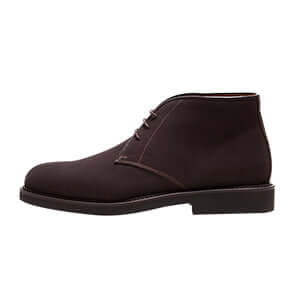 Desert boots
 Oxfords
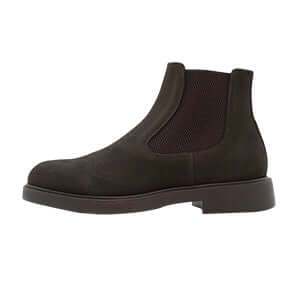 Ankle boots
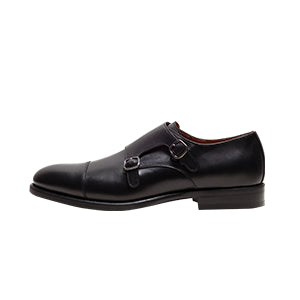 Double Buckle
 End of series
 Novelty
 Loafers
 Derby
Derby Oxfords
 Double Buckle
 Ankle boots
 End of series
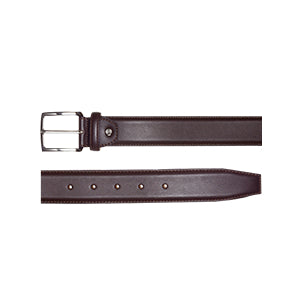 Belts
Belts Shoe care
 Insoles
 Men's socks
 Laces and strings
 Gadgets
The history of Birkenstocks: from orthopedic shoe to global icon
There are shoes that are created for pleasure. And then there are shoes that are created to solve a problem.
Le Birkenstocks belong to the second category. They are not born to show off, they are not born to look elegant, they are not born to be desirable. They are born because the foot has a shape, a weight, an arch, a memory. And because for centuries shoes pretended that all this didn't exist.
The paradox is that precisely this anti-fashion obstinacy has transformed Birkenstock into one of the most recognizable shoes in the world. First German orthopedic sandal, then hippie shoe, then ugly object to avoid, then symbol of freedom, then catwalk accessory, then cultural cameo in Barbie, then a company listed on Wall Street.
Frechete, it took them almost 250 years, but they finally did it: they went from "shoes for sore feet" to a global icon.

1774: it all begins with a German shoemaker
The history of Birkenstocks begins in 1774 in Langen-Bergheim, Germany. The name of Johann Adam Birkenstock appears in the local church registers, listed as a shoemaker. We are not yet faced with a brand, a company or a trend. We are in front of a craftsman.
And this is where the story gets interesting. Because Birkenstock is not born from an aesthetic intuition, but from an artisanal and functional vision: the shoe must follow the foot, not force it. In an era in which many shoes were rigid, flat and built more according to habit than according to anatomy, this idea was not at all trivial.
The first seed of the Birkenstock philosophy is all here: a shoe should respect the natural shape of the foot. Today it seems almost obvious. Then no.
1896: Konrad Birkenstock and the anatomical insole
The real technical turning point came in 1896 with Konrad Birkenstock, descendant of the family. It was he who developed a flexible and shaped insole, designed to support the arch of the foot and better distribute the weight of the body.
Here Birkenstock is not yet a sandal. It's not the Arizona model yet. It is not yet the shoe you see on the street, at the seaside or in airports around the world. It is first of all a orthopedic system.
For decades, Birkenstocks have been perceived more as tools for foot health than as footwear to be desired. Doctors, podiatrists and people with support problems are starting to look at that insole as a concrete solution. Fashion, however, is very far away.
And that's exactly the point: before becoming "cool", Birkenstock was useful. Before becoming aesthetics, it was anatomy.

Thirties: Birkenstock becomes a system
In the 1930s the Birkenstock family continued to develop their approach to foot health. The insole is no longer just a product: it becomes a method, a technical culture, a way of thinking about footwear.
Carl Birkenstock works on spreading this vision and publishes texts dedicated to the Birkenstock system. In this phase the brand remains linked to the medical, orthopedic and specialist world. There is nothing glamorous yet. Indeed, the charm of Birkenstocks lies precisely in the fact that they seem totally indifferent to the taste of the moment.
Their language is different: support, posture, comfort, insole, foot. Words that today even fashion has learned to use, but which back then belonged more to doctors' offices than to shop windows.
1963: Karl Birkenstock, the Madrid model and the sandal that no one wanted
In 1963 Karl Birkenstock created the first sandal with an integrated anatomical footbed. The model is born Madrid, one of the milestones in the history of the brand.
Legend has it that Karl worked on the project with an almost domestic determination, experimenting with the combination of cork, latex and anatomical structure. The result is a minimal, essential sandal, completely different from the elegant and feminine shoes that dominated the market of those years.

When it was presented at the international footwear fair in Düsseldorf, the Madrid was not welcomed as a revolution. He is laughed at. Too strange. Too orthopedic. Too ugly. Too far from a world made of pointed shoes, tapered shapes and heels.
But this is often the fate of truly new objects: they seem wrong at first because they don't resemble anything already accepted.

Why the Birkenstock footbed has become so recognizable
The strength of the Birkenstock lies not only in the shape of the sandal, but in its anatomical footbed. The foot does not rest on a flat surface: it finds a hollowed out shape, with arch support, space for the toes and a structure designed to better distribute the weight.
The heart of traditional construction is the combination between cork and latex, materials that adapt to walking over time. This is also why many people become fond of their Birkenstocks: after a while they no longer seem like just a sandal, but an object that has taken the shape of the foot and the way of walking.
This idea, very contemporary today, was radical: not to correct the foot to make it fit into the shoe, but to build a shoe that starts from the foot.
1966: Margot Fraser brings Birkenstock to America
The American turning point comes thanks to Margot Fraser, a German woman who moved to the United States. He often suffered from foot pain and, during a trip to Germany, tried on a pair of Birkenstocks. The effect is immediate: those ugly, strange and orthopedic shoes work.
Margot understands something that traditional shoe stores didn't: Birkenstock wasn't meant to be sold as fashion. It had to be sold as well-being, as an alternative choice, as an object for those who no longer wanted to have an uncomfortable shape imposed on them by the market.
Thus the perfect paradox occurs: Birkenstocks do not enter the United States through elegant boutiques or large shoe chains. They enter through health food stores, health food fairs, environments linked to counterculture, natural health, less conventional living.
In other words: before becoming a fashion shoe, Birkenstock was discovered alongside vitamins, whole grains and lentils. Far from flagship stores, influencers and glossy campaigns: America knows Birkenstock among shelves of natural products, alternative communities and people who were looking for a different way of living, dressing and walking.


Seventies: the hippie shoe
In the seventies the Birkenstocks they become a symbolic shoe of the American counterculture. They were adopted by hippies, ecologists, vegetarians, people close to the civil rights movements, alternative environments and communities that rejected the dominant aesthetic.
They were not “nice” shoes in the traditional sense. And that's exactly why they worked. Wearing them meant communicating something: I'm not interested in appearing compliant, I'm not interested in suffering to be elegant, I'm not interested in following official fashion.
Birkenstock thus becomes a political, cultural, almost identity shoe. The shoe for those who choose comfort, naturalness and practicality instead of appearance.
The cliché also arises: Birkenstock sandal, white sock, Bermuda shorts. An image that will accompany the brand for decades, including irony, prejudice and affection.

Because Birkenstocks were considered ugly
To understand the success of Birkenstock we must go through an uncomfortable word: ugliness.
Birkenstocks have long been considered ugly because they didn't try to make the foot slim, they didn't want to make it small, they didn't pursue the idea of sensuality or refinement typical of traditional footwear. They showed the foot for what it is: wide, alive, supported, real.
Their form arises from function: anatomical footbed, cork and latex sole, space for the toes, stable support. Everything that makes them comfortable is also what has made them less than desirable in the eyes of fashion for years.
Then, at a certain point, fashion changed demand. She no longer just asked herself “is it beautiful?”. He began to ask himself: “is it authentic?”, “is it recognizable?”, “does it have a story?”, “does it say anything?”. And Birkenstock was very strong there.
1990: Kate Moss breaks the taboo
In 1990 Kate Moss, very young, appears on The Face wearing a pair of Birkenstocks. It's one of those images that doesn't change everything in a day, but it shifts something.
The model who will become the symbol of a new aesthetic, more essential and less constructed, wears the shoe considered anti-fashion par excellence. It's a powerful short circuit: the coolest girl of the moment with the least cool shoe in the world.
From then on Birkenstock slowly begins to emerge from the confines of orthopedics and counterculture. It doesn't become mainstream yet, but it enters the fashion conversation. And for a brand like this, it's already a revolution.

1992: Marc Jacobs, Perry Ellis and grunge
In 1992 Marc Jacobs brought grunge to the catwalk for Perry Ellis. The collection becomes one of the most discussed in American fashion: flannel shirts, layering, anti-luxury, street aesthetic. And shoes like Birkenstocks also fit into that language.
The collection is so controversial that Marc Jacobs is fired. But the point is made: official fashion has started to look at ugliness, comfort and anti-glamour as a possible vocabulary.
Birkenstock is no longer just the shoe of those who are not interested in fashion. It also becomes the shoe of those who know fashion well enough to challenge it.

From Céline to luxury: when ugly chic was born
In the 2000s and especially in the 1910s, Birkenstock re-entered fashion through the front door. The concept of ugly chic becomes increasingly central: apparently ugly, practical or ordinary objects are reinterpreted as conscious aesthetic choices.
The most symbolic moment comes with the luxury reinterpretations seen in the Céline world under Phoebe Philo. The logic is clear: the anatomical sandal is no longer proof that you don't care about fashion. It's proof that you know her so well that you don't need to obey her.
From here on Birkenstock becomes a transversal object. Those who seek comfort, those who love minimalism, those who live in the city, those who go to the seaside, those who follow fashion, those who reject it and those who simply want to walk comfortably wear it.
When Birkenstocks explode among stars, fashion and pop culture
At a certain point Birkenstocks stop being just "the comfortable shoe" and become a global style signal. The transition is interesting because it does not happen by erasing their orthopedic aesthetics, but by enhancing it.
Birkenstocks begin to appear on models, actors, musicians, celebrities and pop culture figures. The message changes: they are no longer just the shoe of those who don't care about fashion, but the shoe of those who can afford to ignore it. This is where anti-fashion becomes fashion.
The great thing is that they don't lose their strangeness. They remain wide, anatomical, recognisable. But that very form, once derided, becomes their signature.


Birkenstock Arizona, Boston and Madrid: the models that have become icons
When it comes to Birkenstock, some names have become almost stronger than the category itself.
Madrid it is the original model from 1963, essential, with a single band, born as a functional and gymnastic sandal. Arizona it is probably the most recognizable model: two bands, adjustable buckles, anatomical footbed, immediate silhouette. Boston, on the other hand, is the closed-front mule that has experienced a new explosion in recent years, especially among those who love a comfortable shoe that is also more suitable for mid-seasons.
The strength of these models is that they don't change too much. They resist because they are recognisable. In a world that continually updates everything, Birkenstock wins also because it remains Birkenstock.
2015: the EVA turning point and the new generation
In 2015 Birkenstock introduces versions in EVE, a lightweight, waterproof and more accessible material than traditional cork and leather constructions.
This choice further broadens the audience. Birkenstocks are no longer just the anatomical cork sandal to wear for years. They also become a shoe for the sea, swimming pool, travel, summer, everyday use. Lighter, more colourful, easier.
For many young people, especially in Gen Z, the entry into the Birkenstock world takes place right here: cheaper, more immediate, often colorful models, capable of maintaining the brand's identity but with a more pop language.
2021: L Catterton, Arnault and the luxury paradox
One of the most symbolic steps arrives in 2021: the majority of Birkenstock is acquired by L Catterton, an investment fund owned by LVMH and the Arnault family holding company.
The paradox is enormous. The shoe of hippies, of ecologists, of those who for decades had rejected the codes of traditional luxury, enters the financial orbit of one of the most powerful worlds of global luxury.
But if you think about it, it's a less strange marriage than it seems. Birkenstock has everything that luxury today is looking for: history, recognisability, industrial craftsmanship, function, identity, global distribution, accessible but aspirational price. It's not a brand that has to make up a story. He already has the story.

2023: Barbie chooses Birkenstock
In the movie Barbie of 2023, the protagonist finds herself faced with an instantly iconic choice: pink heels or Birkenstock Arizona. On the one hand the perfect illusion, on the other the reality. On one side the fake foot, arched, immobile. On the other, the real, flat, human, free foot.
It's a perfect scene because Birkenstock becomes a narrative symbol. It's no longer just a comfortable shoe. It is the symbol of a passage: from performance to reality, from image to body, from perfection to awareness.
That a shoe born as an orthopedic object ends up in one of the most memorable scenes of a global pop film is almost surreal. But it is also the perfect synthesis of its story.

2023: Birkenstock arrives on Wall Street
Also in 2023, Birkenstock will be listed on the New York Stock Exchange with the ticker BIRK. The German orthopedic shoe that was mocked at trade fairs in 1963 becomes a global public company.
The trip is complete: German village, orthopedic insole, health food stores, California hippies, models, catwalks, Barbie, Wall Street.
Not bad for a slipper that has been accused of being ugly for years.
Because Birkenstocks still work today
The success of Birkenstocks doesn't just depend on fashion. In fact, perhaps it's the opposite: Birkenstock works because it never seems to really chase fashion.
Its strength lies in some very concrete elements:
- anatomical footbed, which supports the foot and distributes the weight;
- cork and latex, materials that adapt to walking over time;
- recognizable shapes, such as Arizona, Madrid and Boston;
- real comfort, not just aesthetic promise;
- anti-fashion identity, which paradoxically has become fashionable.
Birkenstock is not a neutral shoe. Either you love her or you don't understand her. But if you love her, you are unlikely to abandon her.
A lived-in Birkenstock is not to be thrown away
There is another reason why Birkenstocks are interesting: they are shoes that often become attached to the foot. The footbed takes shape, the upper softens, the sandal becomes personal.
Therefore, when the sole wears out, many people simply don't want to buy another pair. They want to recover what they already have. And this is where it comes into play Birkenstock repairs.
At Ciccone we can evaluate the resoling Birkenstock with Vibram sole change, especially when the footbed and upper are still valid but the bottom is worn. It's a concrete way to extend the life of the pair and continue using a shoe that has already taken your step.

Do you have a pair of worn Birkenstocks?
If the upper and footbed are still in good condition, we can evaluate the resoling Birkenstocks with a new Vibram sole. It's a real solution to prolonging the life of your pair instead of replacing them.
Discover the resoling BirkenstocksBirkenstock: the shoe that didn't want to be cool
The greatest thing about the Birkenstock story is this: it was never really trying to be cool. She became cool by staying true to her strangeness.
He didn't hide the footbed. He did not deny cork. It didn't pretend to be a dress shoe. It hasn't stopped looking a little orthopedic. He did something much more difficult: he waited for the world to change its mind.
Today, Birkenstocks are everywhere because they represent a very contemporary tension: we want to be comfortable, but we don't want to look sloppy. We want objects with a history, not just new products. We want recognisability, but also authenticity.
From German shoemaker to Wall Street, from hippie to Barbie, from ugly shoe to icon: the history of Birkenstocks is proof that sometimes fashion comes late. But when he arrives, he gets everything back in one fell swoop.