 Novelty
 Loafers
 Derby
Derby Sneakers
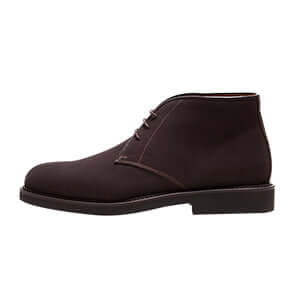 Desert boots
 Oxfords
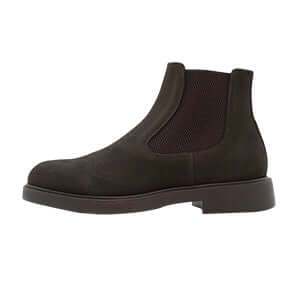 Ankle boots
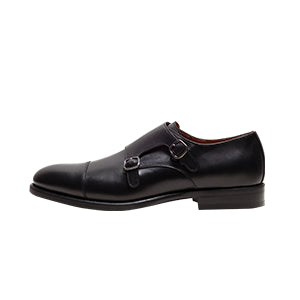 Double Buckle
 End of series
 Novelty
 Loafers
 Derby
Derby Oxfords
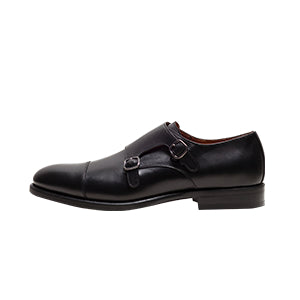 Double Buckle
 Ankle boots
 End of series
 Belts
Belts Shoe care
 Insoles
 Men's socks
 Laces and strings
 Gadgets
Article: History of espadrilles: from popular shoe to fashion
History of espadrilles: from popular shoe to fashion
Espadrilles are lightweight shoes with canvas uppers and soles made of woven vegetable fibres, often esparto, hemp or jute. We recognize them as summer footwear, but their story begins long before holiday fashion: it is a Mediterranean story of available materials, manual work and solutions designed for walking in the heat.
The precise date of their invention is not known. The footwear called espardenyes they appear in Catalan documents from the 13th century; the modern shoe, however, has evolved over time. Here is the path that takes a rope sole from the popular shops to the catwalks, passing through Castañer and Yves Saint Laurent.

Why are they called espadrilles? The answer is under your foot
The name already contains a clue about the construction. According to the Treccani dictionary, espadrilles it comes from ancient Provençal expart, i.e. “sparto”, the vegetable fiber with which the soles were originally made. It doesn't take its name from a designer or a worldly location: it refers to the raw material.
Esparto is a Mediterranean plant with resistant fibres, also used for ropes and weaves. Hemp and, in some areas, jute could also be used in traditional espadrilles. The upper was often made of cotton, with tapes or laces that helped keep the shoe on the foot.
This detail helps to read the name more precisely: not all of today's espadrilles have an esparto sole. “Espadrilles” indicates a family of shoes; materials may change with region, era, and version. Jute and hemp are different fibres, with their own history, although at first glance they may seem similar once woven.

The woven sole was not an aesthetic quirk. It was the heart of the shoe: it transformed a plant fiber into a flexible and relatively light base, suitable for hot climates and daily rhythms.
A Mediterranean story, but without a single inventor
Espadrilles are not created in a boutique or from a project designed by a single person. They are the result of a material culture widespread in the Iberian Peninsula and nearby regions: vegetable fibers, canvas, weaving, sewing and a shape that is easy to produce and repair.
In Catalonia, the espardenyes they have been documented since at least the 13th century. This does not mean that the contemporary shoe already existed identical to today's: it indicates that a shoe with that name and that tradition was already present in the documents. It's an important distinction, often lost when you read that "espadrilles were born in the 1200s."
Their lightness also made them useful in military contexts. The Enciclopèdia Catalana recalls its use by the infantry troops of the Crown of Aragon and, from 1694, its adoption by the Spanish infantry. A shoe made from humble materials could therefore also be useful to those who had to travel long distances.
How to build a traditional espadrille
The construction varies from one region to another, but the idea is simple: you intertwine the fiber to obtain a sole and join it to a canvas upper. For centuries, in many Catalan and Valencian towns, work was carried out in small family workshops. The sources describe a production in which the braids were prepared and then sewn to the canvas, often with manual work.
The simplicity of the shape hides a technique: the rope must be compact enough to support the foot, but not so stiff as to eliminate flexibility. The stitching that joins the upper and sole is also decisive. In traditional espadrilles it remains visible and contributes to their artisanal appearance.

Looking at the shoe from above you can see the canvas; looking at it from the side, the construction of the sole emerges. It is precisely this legibility that distinguishes the espadrille from many more elaborate summer shoes: it does not hide its materials under decorative layers.

The proportions were not identical everywhere. The shape of the toe, the way the heel was covered and the length of the straps changed. The word "espadrille" therefore brings together many local variations, not a single standardized model.

The “set vetes”: seven turns, but only one ribbon
A little-told curiosity concerns the Catalan espadrille of set old, that is, “seven ribbons”. The name suggests seven separate tapes, but the traditional description speaks of a single long ribbon that makes seven turns around the foot and leg, then knots to secure the shoe.
The result is not just decorative: the turns help hold the foot and make the shoe immediately recognisable. In some localities, the shape, color and way of tying the ribbons even distinguished local patterns and traditions.
In a shoe without conventional laces, the webbing also becomes a solution fit. It can tighten or loosen the wrapping and, at the same time, transform the act of tying into part of the appearance of the shoe. A practical detail thus becomes an identity sign.
A popular shoe, but not just for the poor
It is correct to describe espadrilles as popular footwear, linked to farmers, artisans, carters and workers. But the story is more nuanced than the “poor shoe for everyone, then suddenly luxury” idea. The Enciclopèdia Catalana reports that, in some descriptions of the early twentieth century in Barcelona, the espadrilla was also associated with wealthy men, while women wore silk shoes.
The meaning changed according to place, genre, occasion and model. In certain situations it was a work shoe; in others it entered traditional clothing or even a party dress. The same shape could communicate practicality, local belonging or personal taste.
Ethnographic sources also record a surprisingly concrete duration: some models, if used every day for work, could wear out in about six months. It wasn't necessarily a design flaw. It was the cycle of everyday footwear made with materials that wore out and which, once finished, were replaced.
It's an interesting lesson: fashion doesn't always take an object from just one social class and "promote" it upwards. Sometimes the same object passes through different contexts for generations, and only then is simplified into a story of linear transformation.
From work to holiday: the meaning changes, not the structure
In the twentieth century the espadrille began to be associated more and more often with summer and free time. Canvas and woven fibers evoke freshness, lightness and a certain idea of Mediterranean authenticity. The shoe that worked well in the warm months also becomes perfect for walking, traveling and going to the beach.
The transformation is above all cultural. There is no need to erase the rope sole or the simple upper: the context in which you wear them changes. A shoe that previously spoke of work and necessity is reinterpreted as a spontaneous, informal and holiday choice.
It is a reading of the change, rather than a precise date: there is not a day in which the espadrille stops being "for work" and becomes "for holidays". Modern leisure, summer travel and the search for natural-looking objects overlap. The same lightness that was useful while working in the heat becomes desirable in free time.
Espadrilla, espardenya, alpargata: names of a Mediterranean family
Vocabulary changes from language to language and, to some extent, from region to region. In Catalonia the name is encountered espardenya; Valencian tourist sources alongside espardenya, alpargata and “espadrilles” to talk about this footwear tradition. The terms do not always indicate exactly the same model: they often describe a relationship of shapes, materials and techniques.
This is another reason why the origin cannot be reduced to a city or an inventor. The culture of the woven sole crosses territories with its own words and uses, as happens with many artisanal objects before they become global products.
1927: Castañer brings the espadrille into the world of design
An important step came in 1927, when Luis Castañer and his cousin Tomás Serra opened the first Castañer brand workshop in Banyoles. The maison says that Serra designed machinery which, with modifications, remained part of the work in the laboratory. Castañer did not invent the espadrille: he helped transform a shoe of popular origin into a product linked to design and fashion.

The laboratory is interesting precisely because it brings together two phases: on the one hand a shoe already rooted in everyday life, on the other a brand that builds a supply chain and a product identity. It is not a question of replacing tradition with the machine: according to Castañer's story, some machines developed in that phase continue to be present in the workshop.
There is a subtle but important difference here. The transition to fashion does not require you to deny craftsmanship or natural materials. The rope continues to be visible, the canvas remains the protagonist and the construction retains its character. The presentation, distribution and idea of who can wear it change.
1970: Yves Saint Laurent and the first rope wedge
The most famous turning point came in 1970. According to Castañer's official chronology, the meeting with Yves Saint Laurent led to the creation of the first wedge espadrille. The rope sole, until then mainly flat and functional, becomes higher and changes the silhouette of the shoe.

The wedge changes the way the sole is read. From a practical base, close to the ground, it becomes a visible part of the silhouette and the project. It is a passage of design even before decoration: the height changes, the proportions of the leg and foot change, but the material continues to declare the origin of the shoe.
It is a meeting between two worlds that seem distant: a traditional material and a high fashion house. The wedge does not hide the weave; brings it to the forefront and turns it into a style choice. The espadrille remains light and recognizable, but gains height and a new presence in clothing.

From a single shape to many different espadrilles
Today the word includes flat models, wedge versions, shoes with ankle straps and variants with different uppers and materials. Some retain the essential profile of traditional footwear; others use rope as a visual element inside a shoe with a contemporary design.
This is why “espadrille” is not a guarantee of a single construction method. If you want to understand what type of shoe you have in front of you, it is worth looking at three points: the fiber of the sole, the way the upper meets the rope and the presence of any protective layers. These are details that tell whether the model favors tradition, fashion or a compromise between the two.
The name remains strong precisely because it can adapt. The rope can be the protagonist or accent; the upper can be simple or refined; the shoe can remain flat or become a wedge. But as soon as you see that woven sole, the genealogy is still legible.
The final gem: an everyday shoe, not a summer souvenir
An ethnographic fact helps to imagine espadrilles before they became a symbol of holidays: some models could last around six months if worn every working day. The duration depended on the material, terrain and use, but the data reflects a different reality from the occasional accessory we see today in summer shop windows.
Their story is not that of a shoe unchanged for centuries. It is the story of a structure that was able to change its use, shape and meaning while remaining recognisable. First the woven fiber solves an everyday problem; then the same plot becomes a sign of summer; finally the wedge brings it into the language of fashion.
The most beautiful curiosity, then, is not just that espadrilles are ancient. It's that their origin remains legible: just turn the shoe and look at what keeps the foot from the ground.
The history of espadrilles in brief
- Ancient roots: woven fiber footwear is part of Mediterranean material culture;
- 13th century: le espardenyes they are already mentioned in Catalan documents;
- For centuries: upper in canvas and sole in esparto, hemp or other fibers are used for daily life and work;
- 1927: Castañer opens his first laboratory in Banyoles;
- 1970: according to the brand's chronology, Castañer and Yves Saint Laurent create the first wedge espadrille.
Frequently asked questions about espadrilles
Where do espadrilles come from?
Espadrilles have roots in Mediterranean and Iberian shoe culture, with a strong tradition in Catalonia and other areas of Spain and southern France. The shapes called espardenyes they have been documented in Catalonia since the 13th century.
From what material does the name “espadrilles” come from?
The term is linked to esparto, a plant fiber used to make ropes and soles. Traditional espadrilles can have esparto, hemp or jute soles and canvas uppers.
Who invented the espadrille wedge?
Castañer's official timeline credits a collaboration with Yves Saint Laurent in 1970 with the creation of the first wedge espadrille.
Were espadrilles really work shoes?
Yes, many models were practical footwear for work and everyday use in warm climates. However, historical sources show that their use also varied by region and occasion: they were not always associated with a single social class.
A rope shoe, with centuries of Mediterranean inside
Espadrilles bring together work and holiday, tradition and catwalk, plant fiber and fashion. Their story doesn't begin with a designer: it begins with people who knew how to transform available materials into a lightweight, climate-friendly shoe.
Perhaps this is precisely their charm. Fashion has made them taller, more colorful and desirable, but it hasn't needed to erase the detail that started it all: a woven sole, made of rope, under the foot.
To learn more, read the definition of espadrilles on Treccani, the history of espardenyes in the Enciclopèdia Catalana, the Castañer chronology and the story of Museu de l'Espardenya.