 Novelty
 Loafers
 Derby
Derby Sneakers
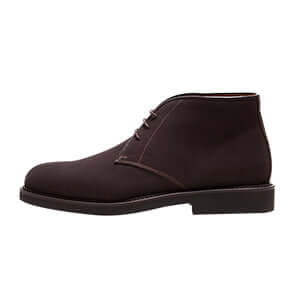 Desert boots
 Oxfords
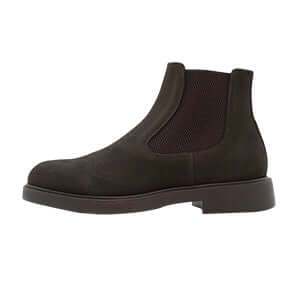 Ankle boots
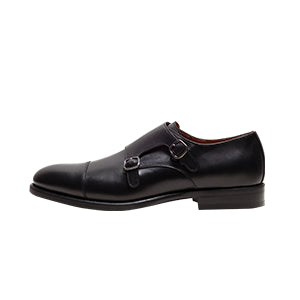 Double Buckle
 End of series
 Novelty
 Loafers
 Derby
Derby Oxfords
 Double Buckle
 Ankle boots
 End of series
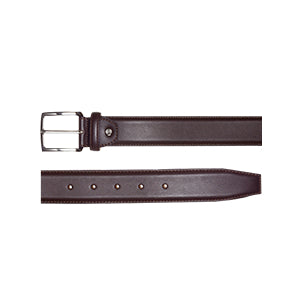 Belts
Belts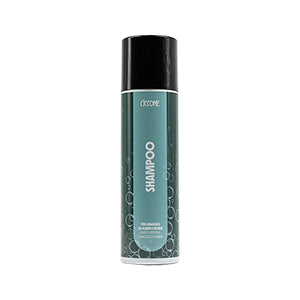 Shoe care
 Insoles
 Men's socks
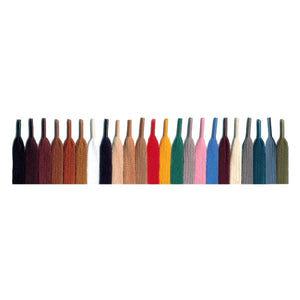 Laces and strings
 Gadgets
Why are they called Desert boots? No, they are not little Polish girls
The calls Desert boots, you put them on with jeans and leave the house. Then someone asks: "But why are they called that?". And suddenly a very easy to wear shoe becomes a geography question.
Let's save the citizens of Warsaw immediately: le Desert boots, here, they are not little Polish girls. They're shoes. The name comes from a wardrobe term, while the suede model we imagine today has a history of simple shapes, journeys and different interpretations. To tell it, it is best to first untie the knot of the word. The lace guy can wait.

Why are they called Desert boots? Let's start with Polish
Desert boot it is the diminutive of polonaise, meaning footwear. The Treccani dictionary records the polo as a pointed female boot laced up to the ankle, and among the diminutives lists Desert boot and Polish. In the clothing lexicon the same word also indicates a jacket: fashion names love to travel from one object to another.
The point is this: the diminutive refers to a type of shoe. It does not demonstrate that the Desert boot modern in suede was invented in Poland, nor does it authorize us to tell a precise Polish military origin. The name and history of the model are two different threads. Pulling them together forcibly produces a good story, but an unreliable knot.
For those who love words, the voice Polish in the Treccani vocabulary allows you to follow this passage of meaning.

From the old boot to the Desert boot that we bring today
Words remain, objects change. In the current language of men's wardrobe, one Desert boot calls one back often Ankle boot, lace-up, with few eyelets and an essential upper. The suede it is the most familiar version, but there are also interpretations in smooth leather and with very different bottoms.
It is this economy of lines that makes it recognisable. The ankle is covered, the lacing is short, the toe doesn't need decorations to be noticed. One Desert boot well-proportioned, it fits under trousers without clashing with everything else. It's an underrated quality: certain shoes enter a room before the owner; this usually accompanies him.

And the desert? The story of Nathan Clark passes through Cairo
When it comes to Desert boots suede, sooner or later it appears Desert Boot. Here we enter into a specific story: Clarks says that Nathan Clark, during his military service in Burma, saw suede boots purchased in the bazaars of Cairo on the feet of officers. That combination suggested the project launched by the brand in 1950.
Suede, essential design and crepe bottom gave the model a lasting identity. The journey therefore does not lead from the office to Warsaw, but from an observation made during military service to the civilian wardrobe. The Italian name «Desert boot» was not born with that launch: it is a different term, which today we also use for shoes with a similar silhouette.
The journey is told in history of Clarks Desert Boot. For the cracked bottom and the construction differences, we have dedicated an article to it history of desert boots.

Desert boot, chukka and desert boot: the similarity is not enough
The three names are often encountered, but they are not a technical data sheet. Chukkas it is used for essential ankle boots with short lacing; Desert boot it is the Italian term with which we describe a family of footwear; desert boot above all it recalls the combination of suede and crepe made famous by Clarks. In common usage the boundaries can blur.
The detail to look at is below. Two similar shoes above may have a crepe bottom, a firm rubber, a lightweight rubber, or a leather sole. Weight, flex, appearance and maintenance change. The name tells the character; the materials tell what you are buying.
And no, one Desert boot it's not a Chelsea with a pair of laces added for distraction. The Chelsea can be recognized by the side elastics and a different upper construction. If you want to compare families, ours guide to men's ankle boots places Bologna, Mantua, Cortina and the Chelsea models alongside.
Bologna: our interpretation, without mandatory sand
Bologna Ciccone brings this line into everyday life: suede, extra light rubber sole, calf lining and removable insole. The leathers come from Tuscan tanneries and the processing takes place in Montegranaro, in the Marche region.
The bottom is in extra light rubber, not in cracks. You don't need to dress up the Bologna as a historic Desert Boot to appreciate it: its balance lies precisely in the lightness of the bottom and the soft surface of the suede. It's a shoe you can wear to work and find again at dinner. The desert, possibly, remains on the documentary.

How do you wear a shoe with so little desire to complicate things
With jeans and sweater it is immediate. With chinos and a shirt it becomes tidier. With flannel or light wool find an interesting combination between surfaces: the pile of suede, the texture of the fabric, a color that holds the look together. Everything doesn't need to be identical; as long as nothing seems to have arrived by mistake.
Look especially at the hem of the trousers. Too much accumulated fabric hides the line at the ankle; a cleaner hem leaves room for it. Blue works well with grays and denim, dark brown with beige and warm tones. The lighter shade visually lightens the whole, but the best choice remains the one you will actually use.

To make them age well, a few sensible habits are enough
The suede is brushed with suitable tools and treated when dry. A compatible protectant can help against spills and dirt, but it does not make the entire shoe waterproof. If the pair gets wet, let it dry at room temperature, away from radiators and hairdryers. Before using a new product, test it in a hidden area.
The fund also deserves attention. A worn sole cannot be judged just by looking at it from above: the tread, heel and joints tell how the shoe has worked. For an operation, the possibility of resoling must be evaluated on the individual pair. Maintenance doesn't need legends; it needs regularity.

In the end, the Desert boots they have a more complicated name than their use. They don't ask for a passport, they don't impose a trip and they don't force you to know the whole story before placing them. But knowing where a word comes from changes the way you look at a shoe. And the next time someone asks you «why Desert boots?", you can answer without inventing relatives in Krakow.
Discover Bologna, the Desert boot Ciccone in suede. For combinations and maintenance, continue with practical guide to Desert boots.