 Novità
 Loafers
 Derby
Derby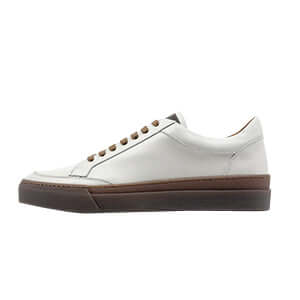 Sneakers
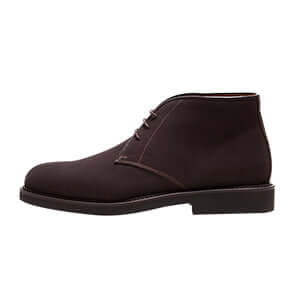 Desert boots
 Oxfords
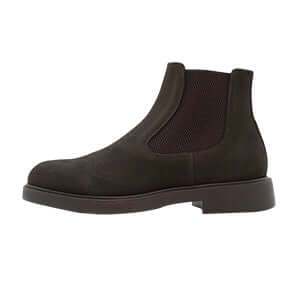 Ankle boots
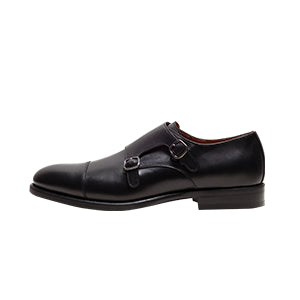 Double Buckle
 End of series
 Novità
 Loafers
 Derby
Derby Oxfords
 Double Buckle
 Ankle boots
 End of series
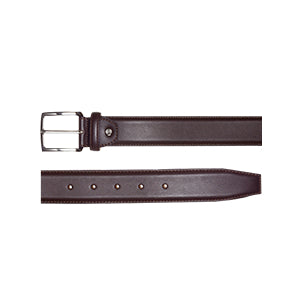 Belts
Belts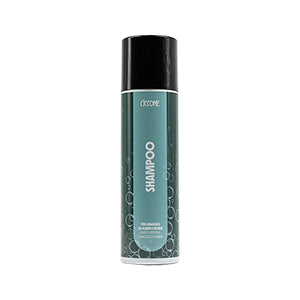 Shoe care
 Insoles
 Men's socks
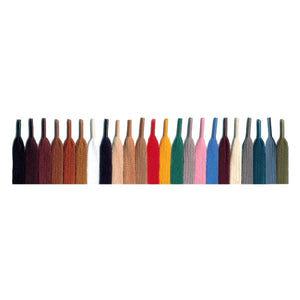 Laces and strings
 Gadgets
White canvas sneakers: why they are back and how to recognize the well-made ones
For years we thought that a sneaker should become increasingly technical, thicker and more complex. In the summer of 2026, almost the opposite is happening: the shoe that gets noticed again is thin, simple, often white and made of canvas.
The so-called canvas sneakers or plimsolls have reappeared on the catwalks and in street style with low and light proportions. Vogue, in its analyzes of spring-summer 2026, reported the return of white canvas sneakers and slim silhouettes inspired by the Nineties; Prada and Celine are among the fashion houses that have brought this essential language back to the foreground.
It's interesting because the canvas sneaker almost seems to have nothing to say. And yet it is one of the best shoes for understanding what it really means to build a simple object well.

Because sneakers are becoming thin again
Fashion often proceeds by reaction. After years of chunky sneakers, chunky soles and almost trekking shoe-like volumes, a flatter silhouette suddenly appears fresh. In 2026, both directions actually coexist: on the one hand, technical and voluminous sneakers continue, on the other, the desire for low, retro and almost anonymous models is growing.
The charm of the canvas sneaker lies right here. He doesn't try to dominate the outfit. A relatively thin sole, a light upper, few visible reinforcements: the shoe returns to accompany the foot instead of transforming it into a volume.
Simplicity is the hardest test
A highly decorated shoe can hide a lot. A white sneaker no. When the design is essential, the symmetry of the stitching, the quality of the canvas, the precision with which the rubber meets the upper, the shape of the toe and even the regularity of the foxing, the rubber band that runs around the shoe in many vulcanized models, become evident.
It is a principle that applies to all craftsmanship: the fewer elements there are, the more each element must work well.
Canvas doesn't necessarily mean cheap
The word “canvas” describes a huge family of fabrics. Weight, weave density, fibre, finishing and reinforcements radically change the behavior of the upper. A canvas that is too thin can quickly lose shape; a very stiff canvas, on the other hand, can be unpleasant until it softens.
To evaluate it, observe the consistency of the weave and above all how the upper reacts when the shoe is slightly flexed. It shouldn't feel like paper, or immediately create deep, messy creases.
Rubber tells a lot about quality
In classic canvas sneakers the sole is often the most important structural element. Many models derive from the tradition of vulcanized rubber: a process that has made it possible to obtain more stable and elastic components than untreated natural rubber.
However, it is not enough for a sole to be "rubber". Compound, hardness, tread design, thickness and quality of the connection with the upper determine grip, flexibility and durability. Excessively soft rubber can wear quickly; one that is too stiff can make a shoe that should be light unpleasant.
How to recognize a well-built canvas sneaker
Start from the shape. Look at the two shoes together: toe, upper height and sole line should be consistent. Then look at the seams. Small variations are normal, especially in products with a lot of manual operation, but very irregular lines or skipped stitches deserve attention.
Check the connection between rubber and canvas. There should be no large raised areas, obvious adhesive residue or discontinuities. Gently press the heel and flex the shoe where the forefoot naturally flexes. A lightweight sneaker doesn't have to be soft: it needs to have a coherent structure.
White: beautiful precisely because it changes
A new white sneaker is almost graphic. Then it begins to live: dust, creases, marks on the rubber and variations in the canvas change its appearance. Trying to keep it perfectly immaculate at all costs can lead to the opposite mistake: overly aggressive washing that ruins the glue, finishes and structure.
The best maintenance is frequent but gentle. Removing surface dirt before it penetrates the fabric makes much more sense than waiting months and then subjecting the shoe to a drastic cleaning.
Washing machine? It's not the first choice
The fact that the upper is made of fabric does not automatically mean that the entire shoe is machine washable. A sneaker is a combination of fabric, rubber, adhesives, reinforcements, padding and sometimes leather. Abundant water, aggressive detergents, centrifuge and heat can stress these elements in different ways.
When the manufacturer does not expressly indicate machine washing, it is more prudent to proceed locally: soft brush, little product suitable for the material and natural drying times.
The real summer enemy: drying them badly
In August a sneaker can get wet from a storm, a day at the beach or simply from sweat. The instinct to place it in the strongest sun or near a heat source is understandable, but it's not always a good idea.
Drying too quickly can stress materials and adhesives and leave marks on the fabric. Better to remove the laces and, if removable, the internal insole, absorb the humidity and leave the shoe to dry in a ventilated place. Inserting absorbent white paper can help maintain the shape, replacing it when it becomes damp.
Because they turn yellow
Yellowing does not have just one cause. Dirt, oxidation, aging of rubber and adhesives, exposure to light and detergent residues can contribute. This is also why promises to restore any sneaker to an "optical white" must be taken with caution: cleaning a surface and reversing the chemical aging of a material are two different things.
Are slim sneakers really more comfortable?
Not necessarily. A thin sole gives greater ground perception and can make the shoe lightweight, yet comfortable and fit they are personal. Those used to highly cushioned midsoles may perceive a plimsoll as drier. The return of slim silhouettes is first and foremost an aesthetic phenomenon, not a demonstration that one construction is universally better than another.
From sports shoe to fashion object
The fascinating thing is that these shoes come from a practical world. The ancestors of canvas and rubber sneakers are linked to sport and free time; the rubber made it possible to walk more silently and flexibly than many previous shoes. In the twentieth century the sneaker crossed gyms, tennis courts, basketball, music and subcultures to become one of the most important categories in fashion.
The return of the white and minimal model in 2026 is therefore less new than it seems. It is the umpteenth turn in a very long history: each generation rediscovers the simple shoe and interprets it with different proportions.
A good sneaker must be able to age
The most interesting parameter is not how perfect a shoe looks in the box, but how it reacts to use. A well-designed sneaker develops creases without immediately collapsing, maintains a harmonious relationship between upper and sole and can be cleaned without any intervention becoming a struggle against the materials.
And when the problem is no longer dirt but structure - a neckline, a very worn rubber, an open seam - it is better to stop before improvising. Understanding whether a shoe is repairable is as much a part of the culture of quality as knowing how to buy it.
The return of the white sneaker says something bigger
At a time when shoes can seem like technological objects, fashion is returning to be interested in even elementary shapes. It's a good reminder: innovation and quality don't necessarily equate to the number of components.
A canvas sneaker is made of very little. Precisely for this reason the shoe speaks well: shape, material, rubber, stitching and proportions. When these elements are correct, not much else is needed.