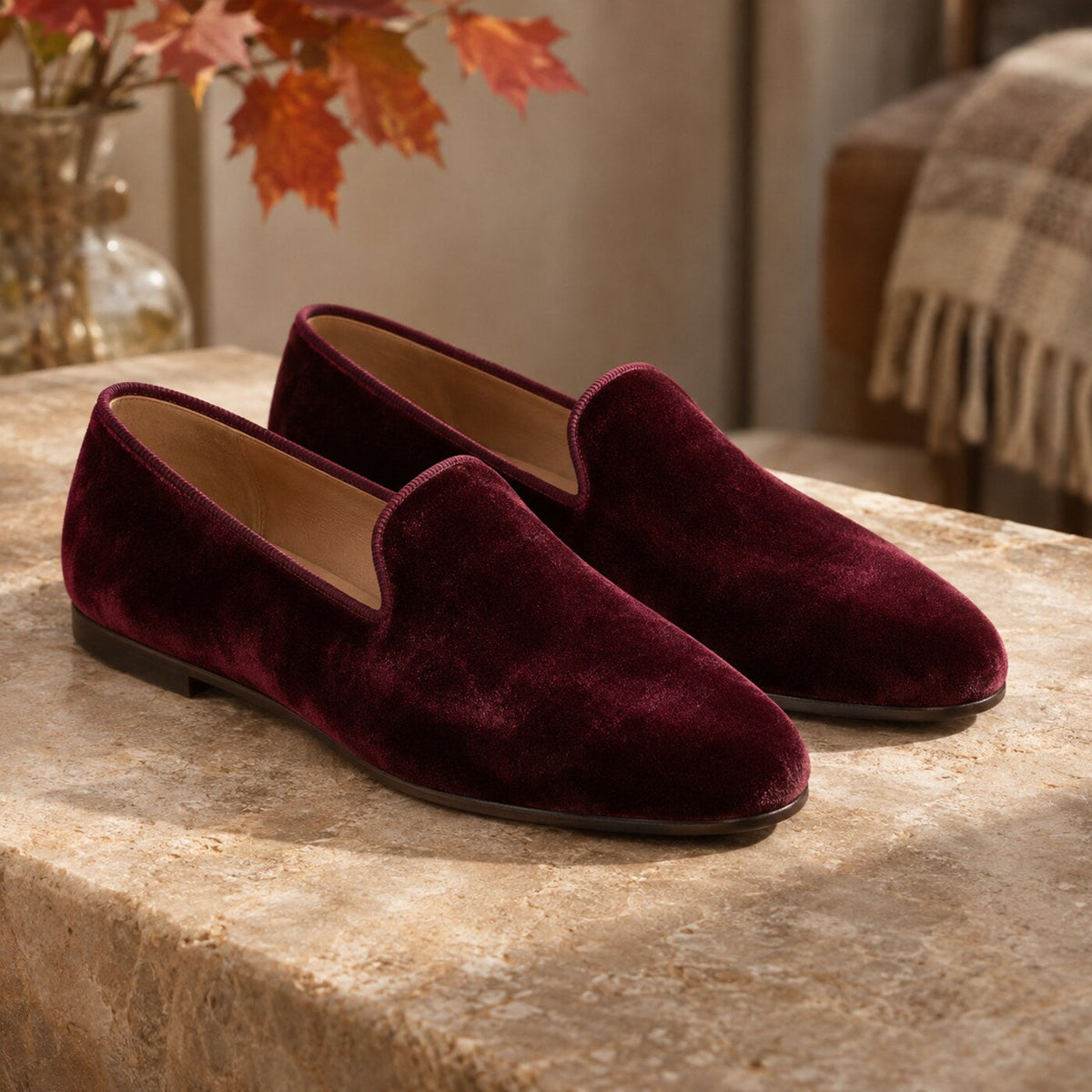
 New arrivals
 Desert boots
 Ankle boots
 Sneakers
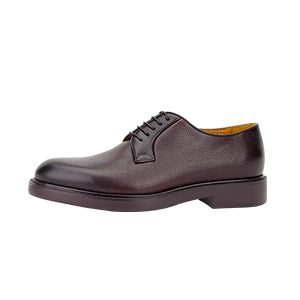 Derby
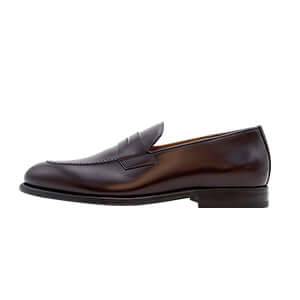 Loafers
 Oxfords
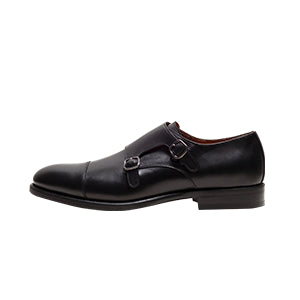 Double monk straps
 Last pairs
 New arrivals
 Ankle boots
 Loafers
 Derby
 Oxfords
 Double monk straps
 Last pairs
 Belts
 Shoe care
 Insoles
 Men's socks
 Shoelaces
 Gadgets
The history of Loafer boat style: from Paul Sperry to preppy style
Today the Loafer from boat you can see it at café tables, in the city, with summer trousers and light shirts. But his first audience wasn't looking for a relaxed look: they were looking to stay upright. This shoe was created to tackle a specific surface, the wet deck of a boat, where a normal sole can turn a turn into a slide.
The history of the boat shoe is a small paradox of style: an object designed for safety at sea became a symbol of holiday, then a preppy classic and finally an everyday shoe. To understand why it has that profile, those laces and that light sole, you have to go back to 1935, to a sailor from Connecticut and a dog with a surprisingly sure step.

The history of Loafer from boat begins with a concrete problem
The protagonist is Paul A. Sperry, American sailor and inventor. In 1935, after experiencing how easy it was to lose grip on the deck of his boat, he began looking for a solution. Wet wood is a difficult surface: smooth, sloped and constantly moving. Ordinary shoes were not meant to offer grip in those conditions.
The first Sperry Top-Sider model was not yet the leather shoe that we associate with boat shoes today. It had a canvas upper and a clear rubber outsole. The name Top Sider it recalls the "topside", that is, the upper and uncovered part of a ship: the place where the sailor must move, not a showcase in which to pose.

The dog Prince and the idea of grooves
The most told gem in history concerns Prince, Sperry's cocker spaniel. According to the story handed down by the brand, the dog ran on the ice without slipping. Sperry looked at the grooves in his fingertips and wondered if a similar principle could also help a shoe.

The legend is memorable, but the technical detail matters just as much: Sperry etched the rubber with small cuts, a principle known as siping. The herringbone pattern creates many contact edges and helps disperse water under the sole, promoting grip. It's not magic and doesn't make any surface impossible to slip; is a project that tries to improve contact with a wet bridge.

Another test, told in the reconstructions of the Sperry story, was much less romantic and much more practical: wetting the bridge and checking whether the shoe could stop. It's a good image of how certain innovations are born: first you identify a daily gesture that doesn't work, then you test a solution in the real environment.
1935, 1937, 1939 and 1940: a chronology to read well
The dates are sometimes mixed, because invention, patent, development of the upper, and military adoption are distinct steps. The most useful chronology is this:
- 1935: Sperry introduces his boat shoe and begins the history of the Top-Sider.
- 1937: the version with leather upper is developed, closer to the classic image of the Loafer from boat.
- 1939: US patent for non-slip sole design is granted.
- 1940: the shoe enters the use of the U.S. Navy for the casual uniform, according to Sperry company history.
This distinction avoids a frequent mistake: the boat shoe is not born complete and identical to the model we know. The first version in canvas and rubber was perfected over time; materials, construction and distribution change while the basic idea remains the same.

Why is the sole clear? And why the Loafer does it have laces for boats?
The light sole it had a very concrete function: to reduce the dark marks left on the bridge. It wasn't a detail chosen just to match the upper or the marine colors. For this reason, even today non-marking rubber is one of the most recognizable features of boat shoes, even if it has now become an aesthetic code as well as a practical solution.
Even laces have a reason for use. In classic models they pass around the instep, often through side eyelets, so as to adjust the fit fit and keep the shoe more stable while moving. In many versions the leather lace runs along the edge; 360-degree construction is a hallmark of various traditional boat shoes, not a universal rule for every shoe sold under this name today.
The front seam resembles that of Loafer and contributes to the character of the model. But call it "Loafer from a boat” does not mean that it is simply a Loafer classic with a different sole: the boat shoe is a category created for the nautical environment, with grip, materials and details designed for the deck.

From sailing to the U.S. Navy
An invention useful to sailors, it soon attracted the attention of those who actually worked on boats. Between the late 1930s and 1940, the Sperry shoe was associated with the US Navy and its casual uniform. The transition to the U.S. Navy is important because it takes the model beyond the circle of sailing enthusiasts: production and visibility increase, and a shoe born as personal equipment begins to become a recognizable product.

Here is a little-told passage: the credibility of the boat shoe did not come from a fashion campaign, but from the promise of functioning in a place where grip is a question of safety. Then when the shoe leaves the deck, it carries with it that story in the details: the sole, the lace, the stitched toe and the low profile continue to suggest nautical use even when there isn't a boat nearby.
How a technical shoe became preppy
After its diffusion among sailors and military adoption, the Loafer from a boat he begins to travel on land. In the United States it finds ideal terrain on campuses and in East Coast wardrobes: chinos, polo shirts, cable knits, light jackets. Its tidy but informal appearance adapts well to the collegiate style, which transforms practical elements into signs of belonging and taste.
The boat shoe does not become preppy because it is particularly formal. It works precisely because it sits in the middle: more structured than a beach shoe, less rigid than a lace-up. It is a leisure shoe with a construction that speaks of competence, tradition and outdoor life. The result is that paradox that is still current: it seems like a relaxed shoe, but it arises from a problem that wasn't relaxed at all.

From the bridge to the aperitif: why it continues to work
The shoe has gone through different fashions because it is easy to read and match. Leather, visible stitching and laces make it more refined than a simple sneaker; the rubber sole and low profile keep it informal. Today it is worn with cotton, denim, linen trousers and summer garments, but its character also depends on the construction: upper, lining and bottom change comfort and durability more than the name "boat" alone suggests.

A useful curiosity when choosing or evaluating a pair: an engraved sole is not automatically eternal. The grip depends on the compound, the depth and wear of the cuts; when the tread wears out, the shoe can lose part of its original function even if the upper still appears in good condition. Maintenance and the possibility of repair therefore matter as much as the silhouette.
The Loafer from a boat is truly a Loafer?
In common parlance, yes, because the stitched tip and the line resemble the Loafer. In a more precise sense, it is a nautical shoe with its own characteristics: non-slip and non-marking rubber sole, functional lacing and construction designed to stay on board. “Boat shoe”, “deck shoe” and “Top-Sider” are often used synonymously, but Top-Sider is also the historical name of the Sperry model.
Curiosities to remember
- The first Sperry version from 1935 had a canvas upper; the leather one arrived in 1937.
- The grooves on the sole are inspired, according to the best-known story, by the paw pads of the dog Prince.
- The herringbone pattern is a type of siping: small cuts in the rubber that aid grip.
- The light color of the sole serves to avoid leaving dark marks on the decks.
- The word Top-Sider refers to the upper part of the ship, the deck.
- The U.S. Navy helped make known a shoe that was initially intended mainly for sailors.
- The stitching from Loafer has become a sign of style, but the model was born as a technical shoe.
Frequently asked questions about Loafer from boat
Who invented the Loafer from a boat?
The modern model is attributed to American sailor and inventor Paul A. Sperry, who introduced the Top-Sider in 1935.
Because the Loafer does it have a white sole?
The clear non-marking rubber was designed not to leave dark streaks on boat decks. Today it is also one of its most recognizable aesthetic elements.
Is it true that the idea came from Sperry's dog?
It is the most famous story associated with the invention: observing his cocker spaniel Prince walking on the ice, Sperry would have noticed the grooves of the fingertips and would have drawn inspiration from them for the grip of the sole. It is correct to present it as a historical story handed down by the brand.
When did the boat shoe become fashionable?
After being adopted by sailors and associated with the U.S. Navy, has spread into American civilian life and campuses. The preppy wardrobe transformed it into a leisure shoe, then worn even away from the coast.
The most interesting thing about Loafer from a boat is that every detail tells a function before telling a style. It is a shoe created to avoid slipping on wet decks and ended up on tables, in colleges and in cities. If a pair has worn out but the upper is still valid, the Maestri Ciccone can evaluate whether and how to bring it back into use: because even a shoe with a nautical history deserves to continue its journey.
For further information: Sperry, the history of the brand; Smithsonian Magazine, the story of the Top-Sider; GQ, history and culture of the boat shoe. For other origins and constructions, read also the history of Loafer and our guide on how to repair a Loafer from boat.