 Novelty
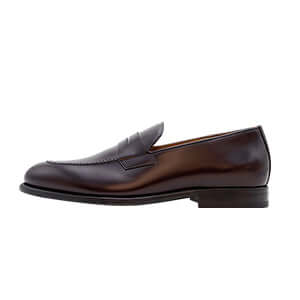 Loafers
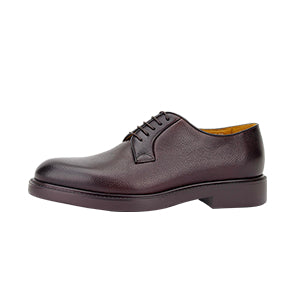 Derby
Derby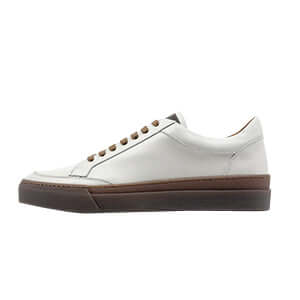 Sneakers
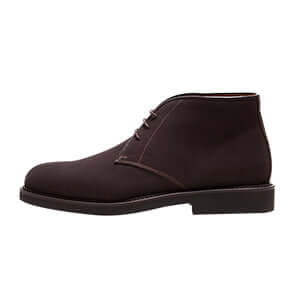 Desert boots
 Oxfords
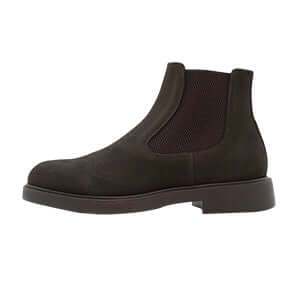 Ankle boots
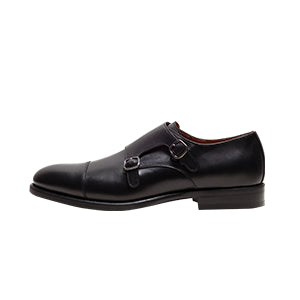 Double Buckle
 End of series
 Novelty
 Loafers
 Derby
Derby Oxfords
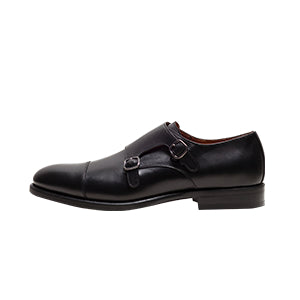 Double Buckle
 Ankle boots
 End of series
 Belts
Belts Shoe care
 Insoles
 Men's socks
 Laces and strings
 Gadgets
The history of Loafer
Why is it called Loafer? It's a simple, almost banal question. And yet inside that word there is an enormous story: North American forests, Norwegian fjords, Ivy League campuses, Hollywood actors, American presidents, Italian jet set, AC Milan footballers, entrepreneurs from the Marche and Loafers worn out items that still arrive today on the shoemaker's counter asking for a second life.
The Loafer it's one of those shoes that seem to have been around forever. It doesn't have the air of a sudden invention, it doesn't seem like a product born from a marketing office. It seems rather like an ancient answer to a very concrete question: How can I walk comfortably, protecting my foot, without giving up freedom of movement?
At Ciccone we know this question well. I Loafers we make them, sell them and repair them. We see how the soles give way, how the suede ages, how the seams open, how the upper often survives everything else. And every time a Loafer arrives in the laboratory, we understand one thing: this shoe did not become iconic by chance.
This is not just the story of Loafer. It is the story of how a shoe created to be practical has become, over the centuries, one of the most intelligent forms of male and female elegance.

The origin of the name: from “makasin” to Loafer
The word Loafer comes from makasin, a term from the Algonquin linguistic family used by several native populations of eastern North America to indicate a soft leather shoe sewn around the foot.
There wasn't just one Loafer. There were many versions, many shapes, many materials. The plains tribes used certain leathers and certain decorations; those in the woods used others. The stitching changed, the embroidery changed, the skins changed: deer, bison, elk. But the principle was always the same: a soft, flexible shoe, built to accompany the foot instead of constraining it.
This is the most important point, also from a technical point of view. The Loafer it was not born as a "fashion" shoe. It was born as a functional object. A leather that wraps the foot, stitching reduced to the essential, no useless rigid structure. The foot feels the ground, the skin adapts, walking remains natural.
Many centuries later, when we talk about bag manufacturing, about Penny Loafer, about Weejun, about Brera, about Gommino, basically we will always talk about the same intuition: a shoe that improves because it adapts to the wearer.
Shoemaker's Note: the Loafer it's interesting because it overturns the logic of many classic shoes. It's not just the foot that needs to fit the shoe. It is also the shoe that, over time, takes on the pace of the wearer.
Because a good one Loafer improves with use
A traditional Oxford or Derby shoe is built around a more rigid structure. The shape imposes volumes, proportions, points of tension. When you wear it, you often have to “break it in”. It can be hard at first, then little by little it gives in.
The Loafer, especially the well-built one, follows a different principle. The upper is closer to the foot, the structure is less authoritative, the fit it is more progressive. This is why so many Loafers, after a few weeks, they seem to become “their own”. Not simply comfortable: your own.
This also explains why it makes sense to repair them. In the laboratory we often see Loafers with the finished sole, the worn bottom, the heel to be redone, but with an upper still alive. In those cases throwing everything away would be a shame. The part that took the shape of the foot is precisely the part that deserves to stay.
The sole can be replaced. Comfort built over time, however, cannot be bought new.
Aurland, Norway: the fjord where the modern Loafer was born
To get to the Loafer modern day we have to leave North America and move to Norway, to Aurland, a small village overlooking a fjord. It was born here Nils Gregoriusson Tveranger, Norwegian shoemaker who left for the United States at the end of the nineteenth century to learn the trade.

In Norway there already existed a simple, practical, laceless local shoe used by farmers and fishermen. In America Tveranger meets the tradition of Loafers natives. When he returns to Aurland, he puts these two paths together: the practicality of the Norwegian shoe and the enveloping softness of the Loafer American.
The result is theAurland Moccasin, a laceless shoe that's soft, easy to wear, yet tidy enough to step out of the rural world and into the urban wardrobe.
This is where the Loafer it stops being just a traditional shoe and starts to become a modern shape. Not yet elegant in the full sense of the word. Not preppy yet. Not yet luxury. But already recognisable.
G.H. Bass and the Weejun: America transforms the Loafer in cultural uniform
In 1936 he entered the scene G.H. Bass, an American brand founded in Maine. Bass takes the Norwegian inspiration of the Aurland Moccasin and turns it into an American product: the Weejun. The name is a mispronunciation of "Norwegian", Norwegian. A tribute to the origin, but also a perfect commercial gimmick.

The decisive detail is the leather strap on the upper, the saddle, with the small central opening. It's a simple, almost decorative detail, but it changes everything. That slit will become one of the most recognizable icons of American fashion.
In the 1950s, students on Ivy League campuses began putting pennies in the saddle slot. Legend has it that it was used for emergency calls from telephone booths. Maybe it's true, maybe not. It was probably also, and above all, an aesthetic gesture. A code. A way of saying: I know how to wear this shoe.
Thus was born Penny Loafers.

Hollywood and the Loafer: when a comfortable shoe becomes style
The Loafer enters the global imagination also thanks to Hollywood. Before becoming a "university" shoe, it is already a shoe for men who know how to move.
Fred Astaire, who had made movement into an art form, wears Loafers with a naturalness that at the time was almost a provocation. In a world where male elegance was still very codified, the Loafer it introduced something new: lightness, ease, freedom.
Then the 1950s arrive and everything changes. The Loafer moves from refined wardrobes to images of rebellious youth. James Dean he wears it with jeans, open shirts, jackets, cigarettes, dirty looks. The same shoe that on campus represented belonging to a cultured and privileged class becomes a disruptive shoe in the cinema.
This is one of the magic of Loafer: can be conservative and rebellious at the same time. It can go with a blazer and jeans. It can be Ivy League, Hollywood, Italian bourgeoisie, entrepreneurs from the Marche, Danish girl on TikTok, shoemaker in the laboratory.
Few shoes have crossed so many worlds without losing identity.
JFK and the Penny Loafer: effortless American elegance
What also definitively consecrates the Penny Loafer as a symbol of American elegance John Fitzgerald Kennedy. Former Harvard student, young, photogenic, informal enough, JFK perfectly embodies the new American ideal: authoritative without being rigid.

With Kennedy the Loafer it's no longer just a student or weekend shoe. It becomes a relaxed power shoe. A shoe for men who don't need to prove too much.
It is an important cultural transition: male elegance begins to move from rigidity to security. You no longer need to look stuffed to appear authoritative. The Loafer it fits right into that space: elegant enough to be respectable, casual enough to feel modern.
Gucci 1953: the Loafer it becomes Italian luxury
In 1953 Aldo Gucci takes the Loafer and adds a sign destined to become immortal: the equestrian bit. TheHorsebit Loafer.

This is a huge breakthrough. The Loafer American was democratic, academic, practical. Gucci makes it aristocratic, international, desirable. The equestrian bit recalls the world of horse riding, travel, private clubs and elegant salons. It's a small detail, but it speaks a precise language.
As a shoemaker, the Horsebit is interesting because it shifts the focus from construction to recognisability. The Weejun lived on function, softness, campus, informality. The Gucci Horsebit lives on. You recognize it from afar. You immediately understand what it is.
And it is precisely this recognizability that makes it enter the wardrobe of the international jet set. The Loafer it is no longer just a shoe to wear. It's a cultural statement.
Fratelli Rossetti and the Brera: when tassels become Italian
Tassels are not born in Italy, but Italy makes them elegant in its own way.
The American tassel loafer was born in the mid-twentieth century, linked to the request of the actor Paul Lukas to transform a decorative detail into a shoe without laces. But it's with Rossetti Brothers that the Loafer with tassels it truly enters the Italian imagination.
The decisive model is the Brera, launched in 1968 and dedicated to the Milanese neighborhood of artists, painters, architects, bars full of smoke and ideas. The name is perfect: Brera is not just a place. It's a way of being in the world.

The most beautiful story, however, is that of Gianni Rivera. In the 1960s Fratelli Rossetti also dressed Milan. I Loafers with tassels, at first, they didn't convince everyone. They seem strange, too decorated, perhaps too American. Then Rivera puts them on.
And when Rivera wears them, everything changes.
Because Rivera wasn't just a footballer. It was elegance, intelligence, Milan, talent, measure. He was the kind of man who could make something natural that seemed daring the day before. In modern terms we would say “influencer marketing”. But here we are in 1968, and the word influencer doesn't exist. There is only one thing stronger: the right man with the right shoe at the right time.
From there the Loafer with tassels it stops looking like a quirk and becomes Italian style.
Tod's and Gommino: the Italian entrepreneur enters the Loafer
In 1979 Diego Della Valle patented the Rubber of Tod's. It's another turning point, different from Gucci and different from Rossetti.

Gucci had brought the Loafer in international luxury. Fratelli Rossetti had brought it into Milanese elegance. Tod's brings it into an idea of life: car, weekend, business, free time, cashmere, travel, an Italian province that becomes the world.
The Gommino was born as a driving shoe, but becomes much more. The rubber spheres on the sole are not just aesthetic: they change the way the shoe rests, flexes and grips. It is a soft, immediate, recognizable shoe. It doesn't want to be an Oxford, it doesn't want to look like a sneaker. It's a third thing.
In the 1980s and 1990s it became the shoe of the Italian entrepreneur: elegant enough to wear with tailored trousers, comfortable enough to drive, travel, work, go to the airport, enter the office and then go out for dinner.
It's the Loafer which says: I'm dressed well, but I don't need to tense up.
The Loafer today: quiet luxury, TikTok and a return to durability
After years dominated by sneakers, the Loafer he's back. But it didn't come back as nostalgia. It is back because it responds to a contemporary need.
Today, many people want comfortable shoes, but don't want to always look like they're dressed for the gym. They want something that lasts, that can be repaired, that improves with use, that doesn't get old after a season. In this sense the Loafer it's perfect.
The quiet luxury, the clean Nordic aesthetic, the Copenhagen girl, capsule wardrobes, wide trousers, visible socks, midi skirts, straight jeans: the Loafer he gets in everywhere because he doesn't scream. Work slowly. He does his job.
And this is precisely its strength. It's a shoe that doesn't need to look new every year. The more you wear it, the more it becomes yours. The more you look after it, the more it gives back. The more you fix it, the more it tells.
The Loafer according to Ciccone
From Ciccone il Loafer It's not a quote. It's a living shoe. We produce it in Montegranaro, in the Marche region, in a district where footwear is not a product category: it is a language.
We are interested in Loafers because they are sincere. If the skin is good, it shows. If the construction is done well, you can feel it. If the sole is wrong, you will notice it after half an hour. However, if everything works, the Loafer it becomes one of those shoes you take out without thinking.


Discover the Loafers artisanal men's Ciccone or come and try them in our shops:
- Corso di Porta Romana 40, Milan
- Via delle Barracks 97, Pescara
And if the Loafer does it need to be repaired?
A Loafer done well it should not be thrown away at the first used fund. Often the upper is still beautiful, the leather has taken the shape of the foot, the shoe still has a lot to give. That's exactly where the shoemaker's work comes in.
We repair from Ciccone Loafers Ciccone, Gucci, Tod's, Fratelli Rossetti, G.H. Bass and many other brands. We can intervene on soles, heels, stitching, deep cleaning, skin nourishment and color restoration.
The service of shoe repair it is available in our shops and also at home all over the world.
Free quote on WhatsApp: https://bit.ly/preventivi_ciccone
Frequently asked questions about the history of Loafer
Why is it called Loafer?
The name Loafer comes from makasin, a term from the Algonquin linguistic family used by various Native American populations to indicate a soft leather shoe sewn around the foot.
What does Loafer mean?
Loafer in English indicates a person who loafs or takes his time. The term is associated with Loafer modern because the shoe was born as an informal, comfortable shoe, without laces, designed for free time and then became elegant.
What does Weejun mean?
Weejun is the American mispronunciation of “Norwegian”. G.H. Bass used this name to recall the Norwegian origin of Loafer modern, inspired by the Aurland Moccasin.
Why is it called Penny Loafer?
The name Penny Loafer comes from the habit of American students of inserting a penny coin into the slot of the saddle, the leather strap on the upper of the Loafer.
Who made the famous Loafer with tassels?
The tassel loafer was born in the United States, but in Italy the Loafer with tassels became famous above all thanks to the Brera model by Fratelli Rossetti, launched in 1968 and also linked to the figure of Gianni Rivera.
Because the Loafer Is Gucci that famous?
The Loafer Gucci Horsebit, launched in 1953, is famous for its metallic bit inspired by the equestrian world. He transformed the Loafer from informal shoe to recognizable luxury object.
What is Tod's Gommino?
The Gommino is the Loafer driving shoes made famous by Tod's, characterized by small rubber nubs under the sole. It has become a symbol of relaxed Italian elegance and everyday comfort.
You can repair a Loafer?
Yes. If the upper is still in good condition, a Loafer it can be resoled, cleaned, nourished, restored and brought back to daily use. It is often best to repair it precisely because the leather has already taken the shape of the foot.