 Novità
 Loafers
 Derby
Derby Sneakers
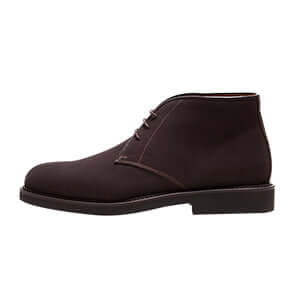 Desert boots
 Oxfords
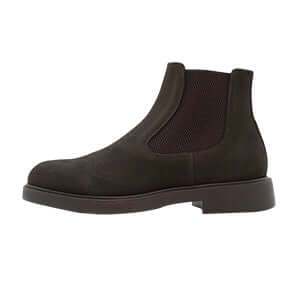 Ankle boots
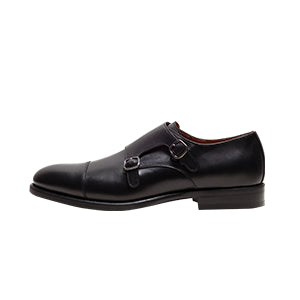 Double Buckle
 End of series
 Novità
 Loafers
 Derby
Derby Oxfords
 Double Buckle
 Ankle boots
 End of series
 Belts
Belts Shoe care
 Insoles
 Men's socks
 Laces and strings
 Gadgets
The history of high-heeled shoes: from Persian knights to Louis XIV
Before fashion: the heel was created to stay in the saddle
When today we think about heeled shoes, we almost automatically think of fashion, elegance, femininity or seduction. Yet the story of the heel begins elsewhere: not in a living room, not in a European court, but on a horse.
One of the most solid theories in fact places one of the decisive moments of its affirmation in the Persian world, between the sixteenth and seventeenth centuries, when knights used a rise under the heel to have greater stability in the stirrup. In that context the heel had nothing decorative: it was one technical tool.

The principle is simple. When the knight stood up in the stirrups to shoot his bow or maintain his balance better, the foot risked slipping. The rise on the heel helped to block the shoe. It is one of those inventions that arise from a concrete need and end up, centuries later, in a completely different territory: that of taste, power and imagination.


How the heel arrives in Europe
In the seventeenth century, diplomatic and commercial contacts between Safavid Persia and Europe also fueled a circulation of fashions, symbols and objects. Oriental clothing, or rather its European interpretation, exerts an enormous fascination on Western elites. Among the elements that change hands there is also the heeled shoe.
In Europe the detail is quickly absorbed by aristocratic men's clothing, because it communicates two very powerful things: authority e distance from practical life. A man with raised shoes, cared for and unsuitable for manual work, conveys the idea of belonging to a class that does not need to get dirty.

This is one of the most interesting gems in the history of the heel: before becoming a symbol associated above all with femininity, the heel was for a long time an accessory masculine, linked to nobility, command and social representation.
The heel as status: those who wear it do not work in the fields
In the European aristocratic world, shoes were not only used for walking. It helps to communicate. A high heel, a delicate sole, a decorated upper and a shape that is not suitable for daily fatigue say one very precise thing: whoever wears that shoe belongs to a world separate from manual work.
The heel thus enters the wardrobe of the nobles not as a simple quirk, but as social sign. Those who wear heels are not there to run in the fields, lift weights or face the mud. It's there to be seen.

Louis XIV and the theatricality of power
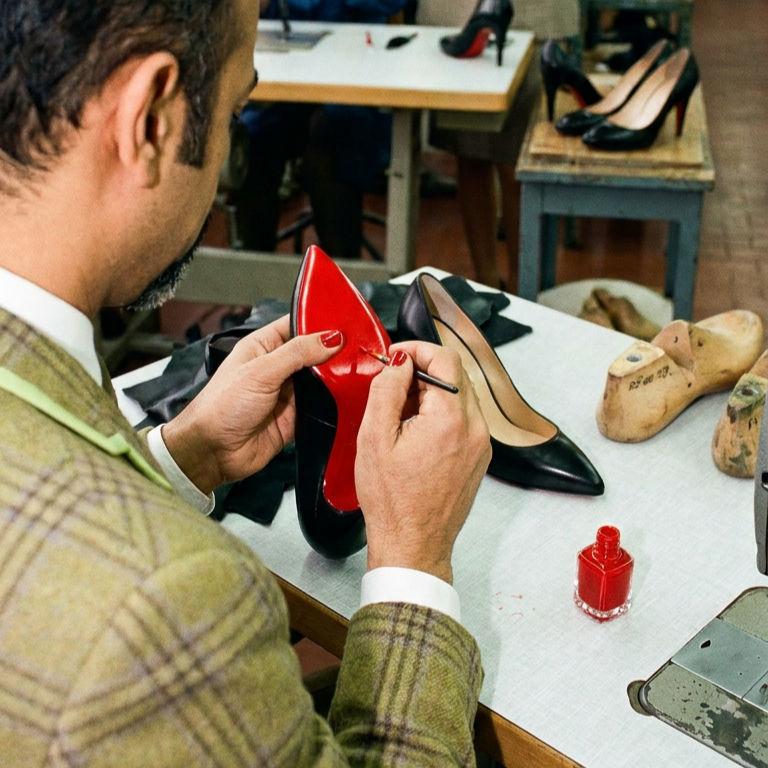
If there is a figure that crystallizes the relationship between heels and prestige, it is Louis XIV. The Sun King did not invent heel, but made it a court language. Her high-heeled shoes, often red, work together with everything else: the wig, the embroidery, the pose, the etiquette, the dance and the scenographic construction of the body.

In that world the sovereign's body is a political device, and the shoe is part of the scenography of power. It is not a secondary detail: it is a piece of the command costume.

The red court heel, in particular, became one of the best-known symbols of this phase. Not because everyone could carry it, but precisely because not everyone could. The heel reiterates hierarchies, privileges, access. It is not yet “elegance” in the modern sense: it is status staged.

When the heel changes gender
Between the seventeenth and eighteenth centuries the heel was present in both men's and women's wardrobes, but with different functions and codes. Over time, however, something decisive happens. Western men's fashion, especially from the end of the eighteenth century onwards, began a process of simplification: less ornamentation, less bright colours, less theatricality.

It is the great turning point towards a more sober, bourgeois and rational masculine ideal. In this passage the heel gradually withdraws from the man's wardrobe and remains more permanently in the women's wardrobe.


On women, however, the heel is transformed: it is no longer just the sign of court power, but increasingly becomes a tool capable of modifying posture, figure and perception of the body. It changes the way the person walks, moves, occupies space.

Nineteenth and twentieth centuries: from elegant accessory to modern symbol
In the 19th century the heel continued to evolve together with the industrialization of footwear. The shapes differ, production becomes broader, new silhouettes are born and the heel enters a more modern, more urban and more consumer-related dimension.
But it was in the twentieth century that the heel took on new cultural meanings. Hollywood, fashion photography, advertising and then ready-to-wear transform the heeled shoe into an object capable of speaking of desire, emancipation, glamour, authority, but also conformism and aesthetic pressure.
The twentieth century does not produce just one heel, but many different heels: day, evening, work, catwalk. Height, shape, balance and message change. The stiletto heel, made famous after the war, takes the matter to yet another level: the extreme verticality becomes a visual statement, a gesture of style that can be noticed from afar.
A technical gem: the heel is not just height
Anyone who works on shoes knows it well: the heel is not just a rise. It's a question of balance. Change the inclination of the foot, the load on the forefoot, the posture of the leg and the distribution of weight. Even a few millimeters can greatly change the sensation of walking.
For this reason, in a well-made shoe, the heel cannot be thought of alone. It must communicate with the shape, the sole, the shank, the rigidity of the bottom, the tip and the type of use. A beautiful but poorly designed heel can be uncomfortable; a well-constructed heel can feel surprisingly natural.
Because the heel continues to count
Today the heel is much more than a shape. It's a choice. It can be classic, theatrical, aggressive, technical, retro, ironic. It can evoke the court of Versailles, cinema, power dressing, the evening shoe, the ceremonial wardrobe, but also craftsmanship and the construction of the body in movement.

The interesting point is that the heel has never had just one meaning. It was born as a practical solution, it became a code of power, then a sign of gender, then an object of fashion, then a cultural symbol.
Perhaps this is precisely why it continues to interest so much. Because centuries of social, technical and symbolic history are condensed within a few centimeters of elevation. And because a heeled shoe, when done well, always tells more than it seems at first glance.