 Novità
 Loafers
 Derby
Derby Sneakers
 Desert boots
 Oxfords
 Ankle boots
 Double Buckle
 End of series
 Novità
 Loafers
 Derby
Derby Oxfords
 Double Buckle
 Ankle boots
 End of series
 Belts
Belts Shoe care
 Insoles
 Men's socks
 Laces and strings
 Gadgets
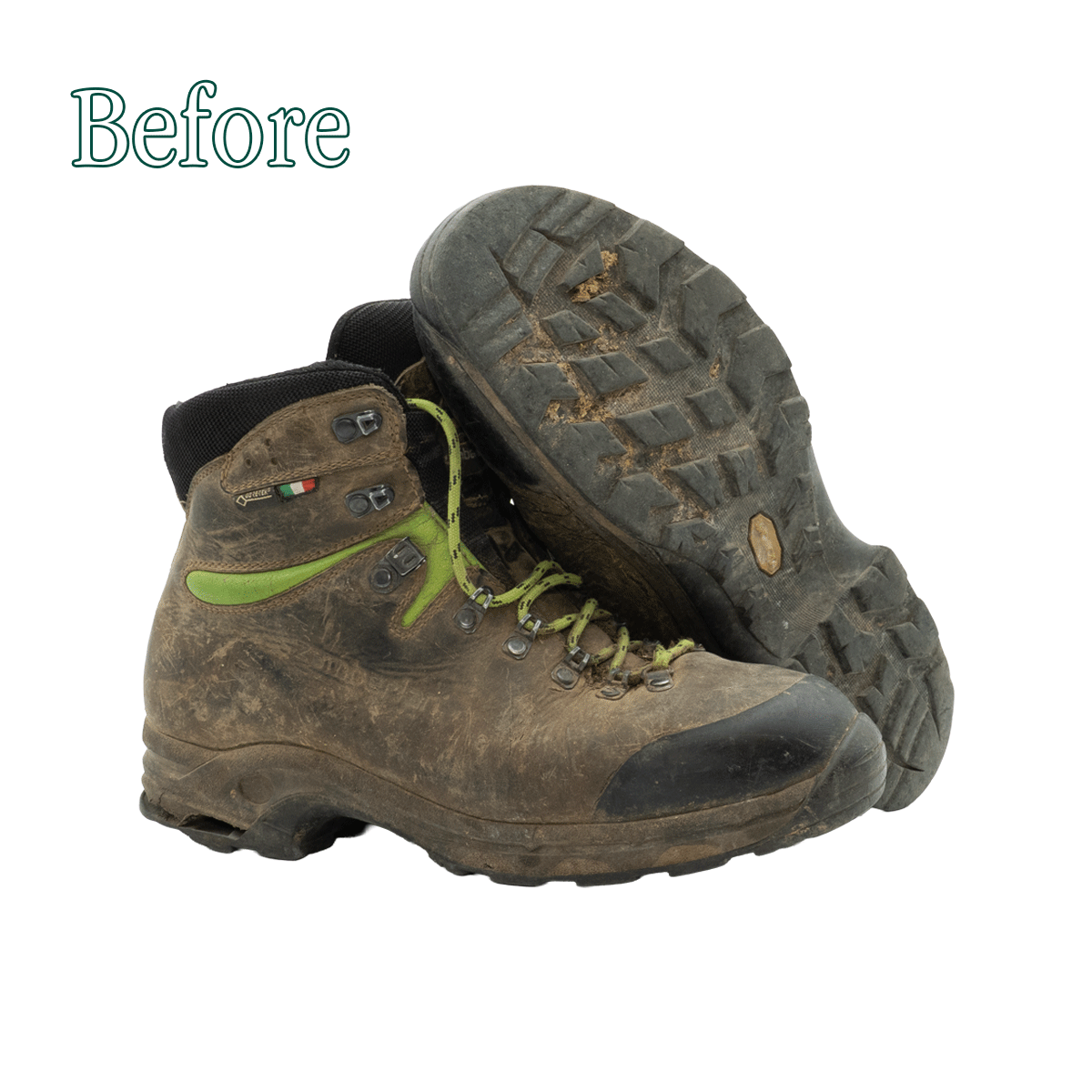
Let's face it: if you have a pair of Zamberlan, you're unlikely to be one for distracted strolls in the centre. Usually we talk about boots that have seen real paths, rocks, mud, snow, differences in altitude, via ferratas, long days and tired but satisfied returns. They are boots built for serious work, not for showcasing.
And it is precisely for this reason that, when the sole wears out, the right question is not "should I change them?", but “are my Zamberlan boots worth repairing?”. In most cases the answer is yes. Because a quality mountain boot, when it still has a healthy upper and a valid structure, is not an object to be thrown away just because the bottom has finished its life.
The resoling of Zamberlan boots is often the smartest choice: it allows you to keep one fit already adapted to your foot, to avoid breaking in a new pair and to bring a boot that you already know well back to the terrain. In other words: you keep the best of the old and recover the best of the new.

Because it makes no sense to throw away a good boot just because of a finished sole
After many kilometers the same thing always happens: you look under the boot and understand that the problem is not above, but below. The blocks lower, the grip drops, the rubber loses incisiveness, the walking changes. What previously worked well in support becomes less reliable, especially on wet, smooth rock, leaves, mud or mixed terrain.
This is where many make the classic mistake: they think they have to buy everything again. But that's not the case. If the upper is still healthy, if the band is holding up, if the shape of the boot has remained correct and if the general support is still valid, resole a Zamberlan it is a logical, technical and often economically sensible choice.
A well-made mountain boot is not a disposable shoe. Indeed: the fact that many models are designed to be resoled is part of their construction philosophy. The upper adapts to the foot, the collar yields in the right way, the internal volume settles, the step becomes more natural. Throwing it away just because of a worn out sole means giving up all of this.
Furthermore, there is another point: a new pair, even a very good one, always requires a phase of mutual understanding. A boot that is already yours has already taken on your foot, your habits, your way of walking. Repairing it means not starting from scratch.
Zamberlan: a true Italian story, from a real mountain
When it comes to Zamberlan boots, we are talking about an Italian reality with deep roots. The brand was born in 1929 and brings with it a mountain culture built over time, through careful workmanship, robust leathers and an idea of technical footwear designed to last. It is no coincidence that Zamberlan has been associated for years with trekking, backpacking, hunting, mountaineering and serious outdoor activities.
This story also matters when it comes to repairs. Because a boot born well deserves to be put back on the field well. And because the logic of resoling it makes much more sense on products of this level than on cheap shoes or ones without real technical structure.
Zamberlans aren't interesting just because they're tough. They are interesting because they are boots designed for work. And objects designed to work, when it's worth it, are maintained, restored and made efficient again.
When is it best to do it? resoling of Zamberlan boots
Not all cases are the same, but in practice there are very clear signals that make it clear when it is time to intervene.
It is worth evaluating one resoling Zamberlan when:
- the tread is visibly worn;
- grip is worse on mud, rock or wet trail;
- the sole is hardening or has lost response;
- you start to feel less stability on descents or on traverses;
- the upper is still valid and it would be a shame to replace the entire boot;
- you want to extend the life of your pair without having to break in a new one.
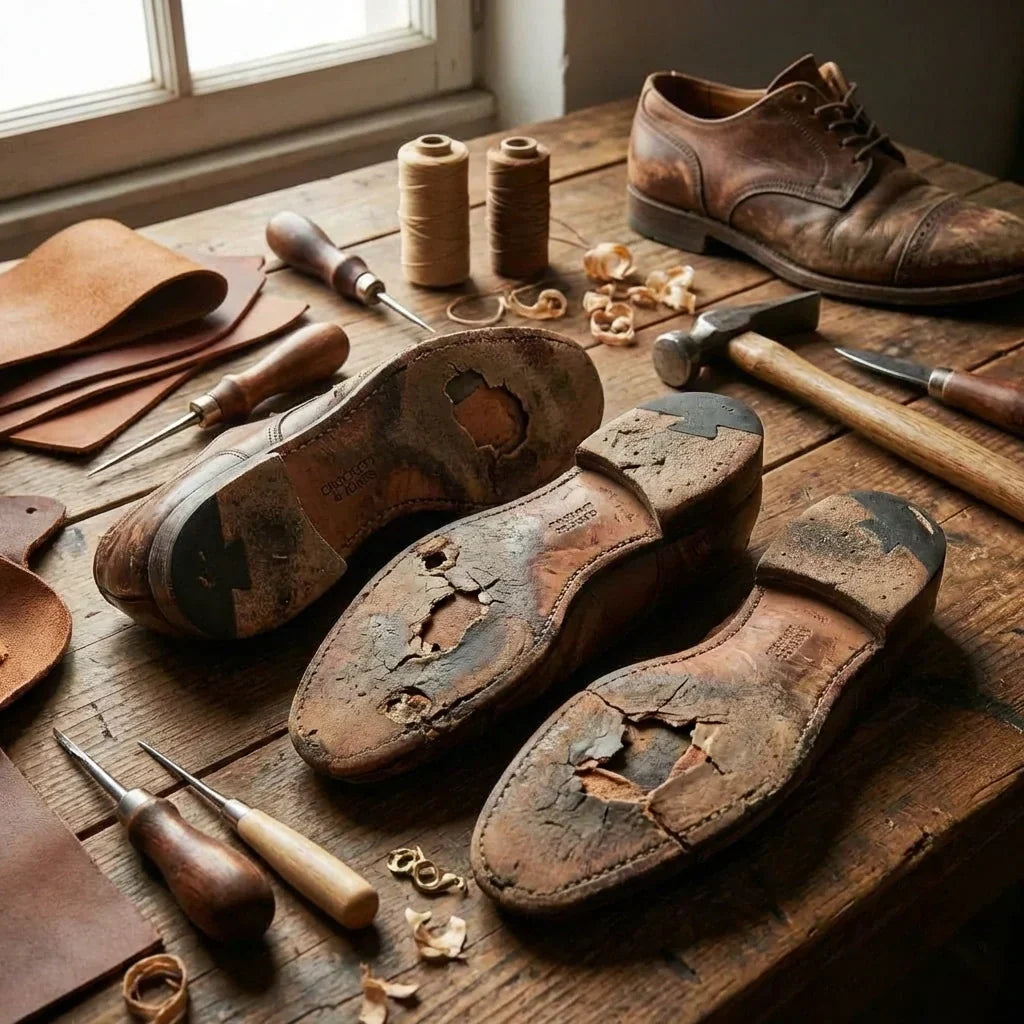
In some cases the problem is evident: smooth tiles, terracotta base, necklines, cracks, loss of support. In others it is more subtle: the boot "still looks good", but on the ground it no longer provides the safety it had before. And that is precisely where a well-done intervention makes the difference.

Why it's worth repairing hiking boots instead of buying them again
The point here is not just to save money. The point is to make a sensible choice.
First: you keep an upper already adapted to your foot. Those who really use boots know very well how important this aspect is. One fit built over time is not recreated in a day.
Second: stick with a boot you know. You know how it reacts uphill, downhill, on the load, in the cold, in the rain, on and off the trail.
Third: you avoid the waste of replacing a product that is still valid in the most important part, i.e. the upper structure.
Fourth: you can even improve the final result. In some cases a good one resoling with a well-chosen technical sole it provides a boot that is more ready, more readable and more consistent with the real use you make of it today.
In other words: it's not a patch. It's a real return to efficiency.
The Ciccone Masters' workshop: where boots go back to work
In the laboratory Ciccone Masters we don't treat mountain boots as simple shoes to be fixed. We face them as technical tools that must go back to doing their job. For this reason the Zamberlan boot repair it is never improvised.
Each pair is evaluated in its entirety: condition of the bottom, residual grip, integrity of the upper, behavior of the band, any areas of neckline, condition of the leather, stitching and general balance of the pair.
When we intervene, we work in several phases.
Substrate preparation: the old sole must be removed carefully, without stressing the structure of the boot and without compromising the upper. Any residue of adhesive or degraded material must be carefully eliminated, because the new base must adhere to a clean and stable base.
Selecting the new sole: There is no "one size fits all" sole. The choice depends on the model, the use and the type of response you want to obtain on the ground.
Checking the fascia and protective parts: the toe area and the rubber band are essential in the mountains. If they need to be taken back, action is taken there too.
Nourishment and finishing of the upper: once the structural part has been restored, the skin must be cleaned, nourished and brought back to a correct condition of elasticity and protection.
Why we use Vibram for resoling of Zamberlan boots
When we talk about mountains, the name Vibram doesn't need much introduction. The story starts from Vitale Bramani and from the birth of the sole Tank in 1937: a turning point that changed the way of conceiving safety and traction at altitude. Since then, Vibram has become a global reference for technical, outdoor and repair soles.
Why is this important? Because in the mountains the sole is not a detail. It is the point of contact between you and the ground. It's the part that decides how well you lean, how well you brake, how much you feel the surface, how much you trust your pace.
For this reason, when we do a resoling Zamberlan trekking boots, we only choose serious technical solutions that are consistent with the actual use of the boot. Vibram remains a reference precisely for the quality of the rubber, the reading of the blocks, the stability and the ability to work well on complex terrain.
Vibram Sniper sole: why it is a strong choice for the mountains
Among the solutions we use there is also the Vibram Sniper, a highly appreciated sole in the mountain and technical trekking sectors. It is a solution designed to offer protection, traction and stability on uneven, wet and slippery terrain.
What we like about the Sniper is its clear technical language: legible tessellation, important presence under the foot and a very serious feeling of support. It is a sole that immediately communicates robustness and reliability, and which works well when the boot has to really work again on demanding trails.
On certain Zamberlan models the result is particularly convincing because it restores bite, structure and safety without distorting the spirit of the boot.

What really changes after a good one resoling
The difference is not just aesthetic. One good resoling of Zamberlan boots the sensation of the step changes.
It can improve:
- the grip on lands where the old sole no longer worked;
- stability in support, especially on descents or on lateral sections;
- perceived safety when the terrain becomes more technical;
- the precision of the pitch because the fund responds again;
- confidence in the boot, which matters a lot for those who go to the mountains.
And here's the most important point: when you put a serious base back underneath, the boot comes back to tell you something reassuring. Get your voice back. Get back to working with you, not against you.
It's not just the sole: bands, uppers, leather and details really count
Often, talking about mountain boot repair, we only think about the tread. In reality, a job done well looks at the whole thing.
The protective band it must be checked because it is the one that takes knocks, stones, bumps and continuous rubbing. A poorly protected toe in the mountains changes the real lifespan of the pair.
Le stitching they must be respected and monitored, especially on well-worn and often used boots.
The leather it must be seriously nourished. Dry skin loses elasticity, becomes stiff, ages poorly and works worse. Good maintenance is not an aesthetic treat: it is part of the structural durability of the boot.
And then there are the details: hooks, lace loops, edges, protections, finishes. These are all things that, added together, decide the quality of the final result.
The digital shoemaker revolution: resoling Zamberlan online
We know well that those who really use boots often already have the next outing, the next trek, the next climb in mind. This is why we have made craftsmanship accessible even from a distance.
With the service of resoling Zamberlan boots online you can request collection and have your boots delivered to the workshop without complicating your life. You send us the pair, we do the work and get it back to you ready to hit the ground running.
It is a simple way to entrust a technical boot to artisan hands without having to physically go to the workshop.
Because today repairing a good boot is a smart choice
Today we are used to replacing too quickly. But the mountain, ultimately, teaches the opposite: it teaches measure, attention, respect for the tools that really work.
One Zamberlan boot resoled well it's not a fallback. It's a smart choice. It means recognizing the value of a valid structure, restoring it to efficiency and continuing to use it in the way for which it was created.
It is a practical, technical, cultural choice. And in many ways even more advanced than buying back regardless.
Don't wait to lose grip just when the trail gets serious.
Get your Zamberlans back on track with the resoling craftsmanship of the Ciccone Masters.