 Novelty
 Loafers
 Derby
Derby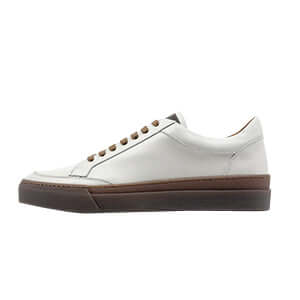 Sneakers
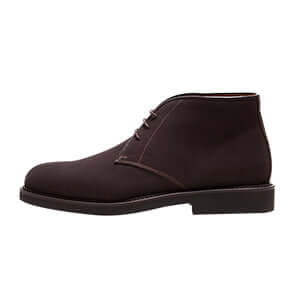 Desert boots
 Oxfords
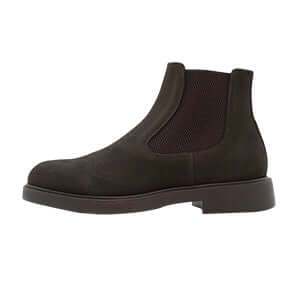 Ankle boots
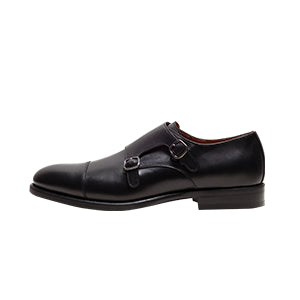 Double Buckle
 End of series
 Novelty
 Loafers
 Derby
Derby Oxfords
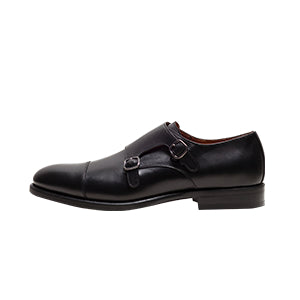 Double Buckle
 Ankle boots
 End of series
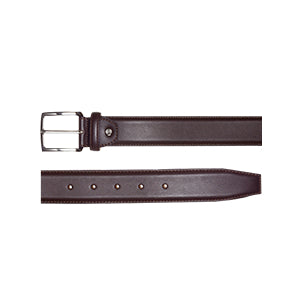 Belts
Belts Shoe care
 Insoles
 Men's socks
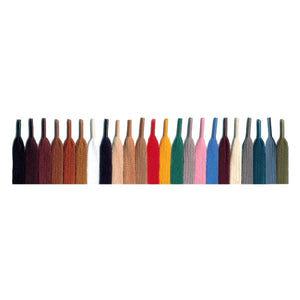 Laces and strings
 Gadgets
How the Loafer with tassels: from the Oscar winner to Milan
There are shoes that are born to be serious. And then there are shoes that seem serious, but underneath they have a history full of cinema, whims, shoemakers, American universities, Wall Street, Italian football and a pair of tassels that changed everything.
The Loafer with tassels, or tassel loafer, it's one of those shoes that seem to have always existed. You see it at the feet of a lawyer, of a professor, of an elegant man in a soft jacket, of a gentleman who knows what he is doing even when he doesn't. And you think: “classic”. End.
But no. Behind those two small leather tassels there is a much more eventful story: an Oscar-winning Hungarian actor, a European shoe with laces, two American shops in two different cities, Alden in New England, Ivy League students, 1980s bankers, a political joke by George Bush and, in Italy, Renzo Rossetti trying to convince AC Milan footballers to wear something that seemed too flashy.
Frechete: all this for two tassels. But sometimes it's the small details that make the big stories.

Before the tassels: the Loafer it was already a small revolution
To understand the history of Loafer with tassels we need to start from a simple thing: the Loafer, Even before being elegant, it is a comfortable shoe. It is a laceless shoe, easy to put on, softer and less rigid than the traditional formal shoe.
The family of modern loafers developed between Europe and the United States in the twentieth century, with many influences: the soft footwear of Native Americans, Norwegian work and leisure shoes, the American penny loafer, English house shoes. They have a very precise idea in common: to remove complexity from the shoe, make it more immediate, more casual, less stiff.
The penny loafers, with its transversal mask, soon becomes a symbol of American style: college, campus, blazers, chinos, polo shirts, soft jackets. It's elegant, but not too much. Comfortable, but not scruffy. A perfect middle ground between the formal shoe and the leisure shoe.
The tassel loafer was born right there: it takes that comfortable base and makes it more decorative, more theatrical, more ambiguous. It's not an Oxford, it's not a Derby, it's not a penny loafer. It's a Loafer with two small leather tassels that seem to serve no purpose. And in fact they are useless, at least technically. But aesthetically they do everything.
The European origins: tassels already existed before the tassel loafer
The first thing to clarify is this: Paul Lukas doesn't invent tassels. Leather tassels on shoes and laces already existed in Europe, especially in some Central and Eastern European shoemaking traditions. In Hungary, Lukas' birthplace, leather decorations and ornamental details on the laces were already part of a certain footwear taste.
What changes is the context. It's one thing to have a European lace-up shoe with a decoration on the laces. It's another thing to turn that decoration into a centerpiece of an American, laceless slip-on shoe built on the basis of the Loafer.
The transition is decisive: the tassel stops being a detail attached to a shoe with laces and becomes the signature of a new shoe. No longer an addition. An identity.

The beauty of the story is precisely this: tassels were not born as fashion, but as artisanal decoration. Then America takes them, simplifies them, puts them together Loafer and transforms them into status symbols.
Paul Lukas: the elegant actor who hated laces
The involuntary protagonist of this story is called Paul Lukas. Born as Pál Lukács in Budapest, in 1894, when Hungary was still part of the Austro-Hungarian Empire. He became an actor, moved to the United States, worked in Hollywood and in 1943 won the Academy Award for best actor for Watch on the Rhine, playing a German anti-fascist fighting Nazism.
He is not the most popular star in Hollywood, he is not the poster star in the bedroom. He is a refined, cosmopolitan, elegant actor. One of those who maybe don't make the crowds scream, but who knows how to wear a jacket, how to move in a room, how to choose a shoe.
And the shoe is precisely the point. Lukas owns a pair of European Oxfords with little tassels on the laces. He likes the detail, but is not satisfied with the shoe. Too many laces, too much structure, fit not perfect. He would like something similar, but more comfortable. Something that retains the character of the tassel, but with a more practical construction.
In other words: he wants an elegant shoe, but less rigid. He wants European charm, but with American convenience. He's asking something simple and very complicated at the same time.
1948: two shoes, two cities, one company
The best part of the story almost seems written by a screenwriter. According to the most cited story, Lukas wears his tasseled shoes from Farkas & Kovacs in New York, asking to make a version more suited to his taste. He likes the result, but the fit he isn't entirely convinced.
At that point he does something rather theatrical, and perhaps as an actor it couldn't have gone differently: he takes a shoe and brings it home Lefcourt in New York; the other ends from Morris Bootmakers in Beverly Hills. Two different shops, two different cities, two parallel attempts to solve the same problem.
The twist? Both stores cater to the same company: Alden, in New England.
It is as if the fate of the tassel has already chosen its shoemaker.


Alden understands everything: not a shoe with laces, but a Loafer true
Alden's genius lies in not just copying a European shoe. It would have been easy: take an Oxford, remove something, add a decoration, and that's it. But no.
Alden understands that the tassel loafer must be a Loafer true. It starts from the logic of the penny loafer, a shoe already comfortable and familiar to the American public, and transforms it with a new construction: a slip-on shape, a decorative lace that runs along the opening and, in front, the two leather tassels.
Thus a hybrid shoe is born: elegant enough to go with a jacket, comfortable enough to fit into your everyday wardrobe, distinctive enough to get noticed without looking like a show-stopping shoe.
This balance is the secret of the tassel loafer. It's not a very formal shoe, but it's not casual either. It is not austere, but it is not frivolous. It's in the middle. And being in the middle, if you know how to do it well, is a very high form of elegance.


1950: the tassel loafer enters the catalog and is sold out
In 1950 Alden officially inserted the Tassel Loafer in your catalog. Initial distribution goes through Lefcourt and Morris, the two shops linked to Paul Lukas' request. The result is immediate: people like the shoe, it arouses curiosity, it works.
Ivy League students adopt it naturally. For them it is perfect: more elegant than the penny loafer, less formal than a lace-up shoe, different enough to communicate personal taste. It's a campus shoe, a library shoe, a club shoe, a blue blazer and light trousers shoe.
Color, leather and construction variations arrive within a few years. The tassel loafer is no longer an experiment born from the whim of an actor: it is a category.
The paradox is magnificent: a Hungarian actor asks for a custom-made shoe and ends up giving America one of its most recognizable shoes.
1957: Brooks Brothers and the preppy consecration
The next step is crucial: Brooks Brothers inserts the tassel loafer into its own universe. And when a shoe enters Brooks Brothers in the 1950s, it doesn't simply enter a store: it enters a social code.
From that moment on Loafer with tassels it becomes part of the American preppy imagination. It's no longer just the shoe of Ivy League students. It is the shoe of the educated, well-dressed man, with a certain type of family, a certain type of office, a certain type of club.
The tassel loafer begins to speak a specific language: establishment, East Coast, campus, country club, liberal professions. It's not the power shoe of the '80s yet, but it's getting there.
Hollywood, Ivy League and that slightly ambiguous charm
Between the fifties and sixties the tassel loafer lived a double life. On the one hand there is Hollywood, with its taste for elegant but slightly theatrical detail. On the other there is the Ivy League, with its more sober, sporty, bourgeois style.
The first models are often livelier than we imagine today: even two-tone, with light panels, closer to an elegant leisure shoe than an office shoe. Then, over time, the model dries: smooth leather, dark colors, black, burgundy, brown, cordovan. Get more serious.
But that little ambiguity always remains: two tassels that move on the instep. An almost useless detail, therefore very important.
1980s: the shoe of Wall Street and lawyers
In the 1980s, the tassel loafer changed its skin again. From a preppy shoe it becomes a power shoe. You can find it at the feet of bankers, traders, lawyers, consultants, men in soft suits, important ties and briefcases.
It is the decade of Wall Street, of glass offices, of financial America that wants to appear confident. In that context the Loafer with tassels it works great: it's elegant but not too traditional, authoritative but not dusty, comfortable but not relaxed.
It basically says, “I'm formal enough to sit at the table, but confident enough that I don't have to tie my shoes.”


Its iconicity becomes so strong that in the United States the tassel loafer even enters the political language. During the American presidential campaign, George Bush will use the image of lawyers with tassel loafers as a way to target Bill Clinton and his world of supporters. When a shoe becomes a political insult, it means that it is now a symbol recognizable by everyone.
The tassel loafer was born from an actor's personal taste. Forty years later it had become a cultural shorthand for lawyers, power, establishment.
And in Italy? Parabiago arrives
The Italian history of tassels comes from a much less Hollywood and much more concrete place: Parabiago, in the province of Milan. Here one of the most important stories of Italian footwear was born and grew: Rossetti Brothers.
Renzo Rossetti began working as a shoemaker as early as the 1940s. He produced sports shoes for cyclists and skaters, then together with his brother Renato he developed the company that would become Fratelli Rossetti. We are in post-war Italy, a country still sober, practical, unaccustomed to the idea of the male accessory as a gesture of style.
In the sixties Renzo understood that the Loafer it can become something new in Italy too. Not just a comfortable shoe, not just an imported shoe with an American taste, but an elegant, Italian, recognizable object.

1968: Fratelli Rossetti's Brera is born
In 1968 Fratelli Rossetti launched the Brera, Loafer with tassels which takes its name from the artistic district of Milan. The name is not accidental. Brera means galleries, painters, intellectuals, cafés, slightly bohemian elegance, a Milan that thinks and dresses well.
Brera did not invent the tassel loafer. It would be wrong to tell it like that. Modern tassels had already entered American history with Alden. But the Brera does something different: brings tassels into the wardrobe of the Italian man.
And it's a huge step. Because in Italy, in those years, the masculine decorative detail is not taken for granted. A tassel may seem like too much. Too flashy, too frivolous, too American. Renzo Rossetti, on the other hand, understands that, if worked well, that decoration can become elegance.
The Italian contribution is not the technical invention of the tassel. It is its cultural translation.
AC Milan, the footballers and the tassel problem
Here the story becomes wonderfully Italian. Fratelli Rossetti dresses AC Milan players. Renzo insists that they wear the Loafer with the bow, that is, with the tassels. But the players are not immediately convinced.
We understand them. We are in the sixties. The Italian footballer is not yet the fashion icon of today, with stylists, brands, capsule collections and social photos. The idea of going out with a decorated shoe, with two tassels on the front, might have seemed too daring.
Too elegant. Too different. Too much of an artist from Brera and not much of a locker room.

In America the tassels go from colleges to Wall Street. In Italy they have to go through the Milan locker room. Frechete, the country changes and the entry rite also changes.
Gianni Rivera: the Golden Boy who changes everything
The decisive moment arrives with Gianni Rivera. Not just any footballer. Rivera is the Golden Boy of Italian football: elegant, intelligent, technical, much loved. European champion in 1968, Golden Ball in 1969, vice world champion in 1970.
Rivera has a rare thing: he is sporty, but he also has a sophisticated image. He doesn't just look like a footballer. He seems like a man who can enter a Milanese living room, speak softly, choose a jacket well and make even a shoe with tassels look natural.
When Rivera wears the Brera, the Loafer with tassels it changes perception. It's no longer an oddity. It's no longer too bold a detail. It becomes an elegant, desirable, Italian shoe.


The real stroke of genius: marketing before marketing
Today we would say: ambassador. We would say: product placement. We would say: storytelling. We would say: celebrity marketing. But in the 1960s all this did not yet have the glossy vocabulary it has today.
Renzo Rossetti does something much simpler and much more intelligent: he puts a new shoe on the feet of people that Italy looks up to. And among these people there is Gianni Rivera, the elegant footballer par excellence.
The message is not “buy this shoe because I tell you to”. The message is more subtle: If Rivera can wear it, if Rivera makes it look natural, then maybe those tassels aren't strange. Maybe they are elegant. Maybe they are Italian.
This is where the Brera becomes more than a Loafer. It becomes a bridge between craftsmanship, football, Milan and men's style.

America and Italy: two different ways of wearing tassels
The beauty of Loafer with tassels is that it tells two different worlds.
In America the tassel loafer was born as an evolution of the penny loafer and became a shoe for Ivy League, professionals, lawyers, bankers. It has a preppy, bourgeois, slightly institutional soul. It's a shoe that says: I know the rules, but I don't need an Oxford to prove it.
In Italy, however, the Loafer with tassels it passes through another sensitivity: softer, more artisanal, more linked to the skin, to the shape, to the gesture. The Brera by Fratelli Rossetti is not just the Italian translation of the American tassel loafer. It's something else: more Milanese, more aesthetic, more theatrical but also more natural.
The same tassel changes accent. In America he speaks English with a campus tone. In Italy he speaks Milanese with a coffee break in Brera.
Because tassels still work today
Today the Loafer with tassels lives a new season. After years dominated by sneakers, logos, performance and technical shoes, many people are returning to truer, more readable, more personal shoes.
The tassel loafer works because it has three rare qualities:
- it is recognisable, because the tassels make it immediately different from a penny loafer;
- it is versatile, because it can go with tailored trousers, denim, chinos, a soft jacket or knitwear;
- It has personality, because it adds a detail without turning into a loud shoe.
The point is all here: a wrong tassel can look like a costume. The right tassel becomes character.
How to wear one today Loafer with tassels
The Loafer with tassels it is no longer just the eighties lawyer shoe. Indeed, today it is at its best when removed from its most predictable context.
It works with a soft dress, sure. But it also works with wide wool trousers, with straight denim, with an Oxford shirt, with a crew-neck sweater, with an unstructured jacket. In suede it becomes more relaxed. In smooth leather it remains more elegant. In burgundy or dark brown it has a classic flavour. In black it becomes more decisive.
The rule is simple: you shouldn't make it look like a disguise. The Loafer with tassels it must seem chosen, not imposed.
If you wear it too formally it risks becoming stiff. If you wear it too sloppily it looks out of place. But if you put it in the middle, naturally, it does what it was born to do: it adds character to a look without raising its voice.
From the tassel loafer to the Loafer Ciccone
For us at Ciccone, the story of Loafer with tassels is interesting because it talks about something we know well: the artisanal detail that changes the perception of a shoe.
A tassel doesn't help you walk better. It doesn't support the foot, it doesn't strengthen the sole, it doesn't make the shoe more technical. Yet it can change everything. It can make a shoe more elegant, more ironic, more personal. It can bring her out of anonymity.
It's the kind of detail that needs to be done well, though. Because the difference between character and caricature is subtle. A tassel must have proportion, movement, right skin, right color, right position. It has to look natural, not tacked on for show.

Do you want a Loafer with character?
The Loafer with tassels is a shoe that looks classic, but always has a little twist. At Ciccone we select footwear designed to last, with leather, proportions and details that make the difference in person, not just in photos.
Discover the collection LoafersThe morality of tassels
The history of Loafer with tassels is a perfect story because it starts from a contradiction: an almost useless decorative detail becomes one of the most recognizable signatures of men's footwear.
It was born from a Hungarian actor who wanted a more comfortable shoe. Pass by Alden and preppy America. It becomes a shoe for lawyers and bankers. It even ends up in American politics as a cultural symbol. Then he arrives in Italy, passing through Parabiago, Fratelli Rossetti, the Brera district and Gianni Rivera.
It's a story of shoes, of course. But also of desire, status, irony, craftsmanship and marketing before marketing.
In the end, tassels are this: a detail that is useless, so it is very useful. Because in style, as in well-made shoes, not everything must have a technical function. Some things exist to give character. And when character is done well, it goes further than fashion.