 Novelty
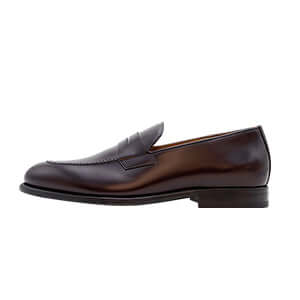 Loafers
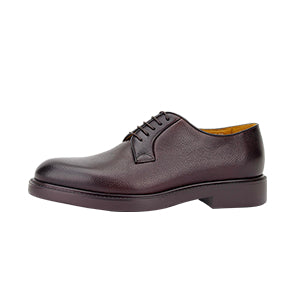 Derby
Derby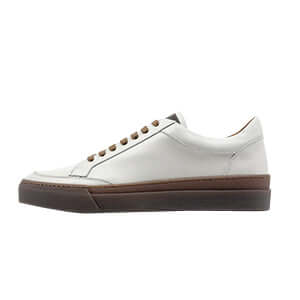 Sneakers
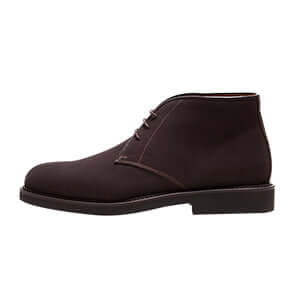 Desert boots
 Oxfords
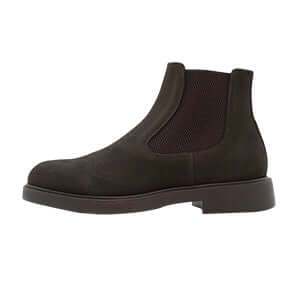 Ankle boots
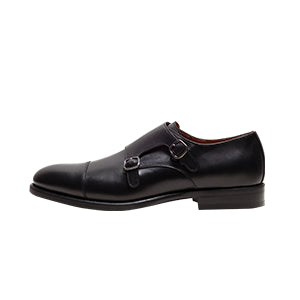 Double Buckle
 End of series
 Novelty
 Loafers
 Derby
Derby Oxfords
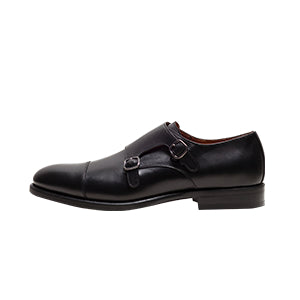 Double Buckle
 Ankle boots
 End of series
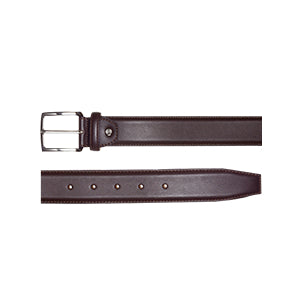 Belts
Belts Shoe care
 Insoles
 Men's socks
 Laces and strings
 Gadgets
History of the footbed: comfort and support of the foot
When we try on a shoe, we look at the toe and press the insole with a finger. But softness and comfort are not synonymous. The history of the insole begins with a more interesting question: what shape should what is under the foot have?
It is a story of attempts, materials and internal volume. And words that today we use too often as if they indicated the same thing.
1902: a three-dimensional idea
The Birkenstock archive places the three-dimensional insole developed by Konrad Birkenstock in 1902. The first combination of cardboard and leather did not have the desired elasticity and lightness. The research continued: in 1913 a mixture arrived that included tar, rubber and small quantities of cork.
The Birkenstock archive documents the development of the footbed and experiments with its materials.
The detail tells of an invention that is less linear than the celebrations: it is not enough to find a shape, you have to find the material that makes it work. In 1925 the company registered the trademark Fussbett. They are two different stages, development of the component and registration of the name.

Insole, insole, insole: what's in the shoe
The structural insole belongs to the construction of the shoe. The comfort insole is the layer in contact with the foot, sometimes removable. A contoured footbed adds a supportive profile; a custom-made orthosis instead arises from an individual evaluation. In conversation the names overlap, but the functions do not coincide.
Summer and Viva Summer: it's not enough to read "summer"
In the Ciccone catalogue, Pedag Summer is a flat sponge insole. Viva Summer instead has an anatomical profile and support components. The images allow you to see the difference before wearing them: a thin, flat surface is not the same design as a contoured support.


Coating, shape and thickness must be read together. A useful feature in one shoe can become a limitation in another. For maintenance, follow the instructions for the individual model: not all insoles are washed or dried in the same way.
The problem is often space, not softness
Inserting an insole over the original one raises the foot. It can reduce volume on the neck, compress the toes, or bring the heel too close to the edge. Before adding it, check if the existing layer is removable and try on the complete pair.
Walk and check the stability, without stopping at the sensation of the first seconds. The choice is not made by pressing the foam on the bench. It is done by putting the foot, insole and shoe together.
A hidden part that changes the project
The merit of this story is that it brought attention to the inside of footwear. External shape and support must communicate: a beautiful shoe with little available space does not become suitable by adding material. To learn more about the concrete choice you can read ours guide to removable insoles.
The desktop image is an illustrative composition adapted with artificial intelligence from a catalog photo.